
Acanthocinus pusillus
(Kirby, 1837)
Little Flatface Longhorn Beetle
Acanthocinus pusillus is a small longhorn beetle in the Lamiinae, described by William Kirby in 1837. The is known from northern North America, with records from western and central Canada including Alberta, British Columbia, Manitoba, and New Brunswick. It belongs to a of bark-boring beetles whose larvae typically develop in coniferous wood.
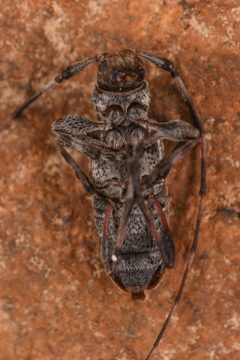
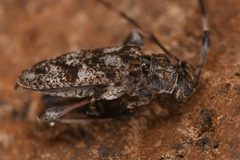
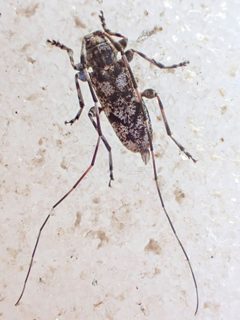
Pronunciation
How to pronounce Acanthocinus pusillus: /əˈkænθoʊˌsaɪnəs pjuˈsɪləs/
These audio files are automatically generated. While they are not always 100% accurate, they are a good starting point.
Images
Distribution
Northern North America. Documented from Alberta, British Columbia, Manitoba, and New Brunswick in Canada. GBIF records indicate presence in North America broadly.
Sources and further reading
- BugGuide
- Wikipedia
- GBIF taxonomy match
- iNaturalist taxon
- Catalogue of Life
- Grasshopper Collections and Survey
- Plains Lubber Grasshopper
- Domestic Sea Trade Aids Wood-Boring Beetles' Range Expansion
- More on ‘Conspicuous Crypsis’ | Beetles In The Bush
- ID Challenge #9 | Beetles In The Bush
- Ozark Landscapes – White River in northern Arkansas | Beetles In The Bush