
Oxymerus
Dupont in Audinet-Serville, 1834
Species Guides
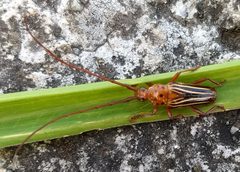
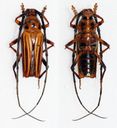
1Oxymerus is a of longhorned beetles in the Cerambycidae, Cerambycinae, and tribe Trachyderini. The genus contains ten described distributed exclusively in the Neotropical region, ranging from Nicaragua and the West Indies south to Bolivia and Uruguay. Species within this genus are medium to large-sized, brightly colored, and . Oxymerus aculeatus is the most widespread species and has been detected in Florida, raising concerns about potential establishment in the United States.
Pronunciation
How to pronounce Oxymerus: /ˌɒk.sɪˈmɛr.əs/
These audio files are automatically generated. While they are not always 100% accurate, they are a good starting point.
Identification
Oxymerus can be distinguished from other Trachyderini by their medium to large body size, bright coloration, and activity pattern. Members of this tribe are generally characterized by elongated bodies and long typical of cerambycids. Specific diagnostic features for the genus versus related genera within Trachyderini are not documented in available sources.
Images
Habitat
Neotropical forests and wooded areas. Specific microhabitat preferences are poorly documented, though have been observed resting on foliage and are presumed to be associated with dead or dying wood for larval development.
Distribution
Exclusive to the Neotropical region: Nicaragua, West Indies, south through Central America to Bolivia and Uruguay. The most widespread , Oxymerus aculeatus, occurs throughout central, eastern, and southeastern Brazil. The West Indian of O. aculeatus has been detected in southern Florida, USA, though establishment status remains uncertain.
Host Associations
- Unidentified tree species - resting site observed resting on underside of foliage
- Dead or dying wood - Larval development substratePresumed based on -level ; not confirmed for all
Behavior
activity pattern observed. have been encountered resting on the underside of foliage during the day. Members of the tribe Trachyderini are frequently found frequenting flowers, though this is not explicitly documented for Oxymerus in available sources.
Human Relevance
Potential concern. The West Indian of Oxymerus aculeatus has been collected twice in southern Florida, prompting monitoring by the Florida Department of Agriculture & Consumer Services. Economic impact is currently unknown, but concern is warranted given the history of other wood-boring cerambycid invasives such as the Asian longhorned beetle and emerald ash borer.
Similar Taxa
- Other Trachyderini generaShare tribe-level characteristics of medium to large size, bright coloration, and activity; distinguished by -level morphological features not detailed in available sources
More Details
Species diversity
The contains ten described : O. aculeatus, O. basalis, O. bruchi, O. chevrolatii, O. flavescens, O. lineatus, O. pallidus, O. punctatus, O. vianai, and O. virgatus
Subspecies in O. aculeatus
Multiple described for the widespread O. aculeatus, including the nominate subspecies in Brazil and the West Indian subspecies detected in Florida
Research gaps
plant records and damage assessment data are limited; O. basalis has been studied for damage in Brazil but specific host were not detailed in available excerpts
Sources and further reading
- BugGuide
- Wikipedia
- GBIF taxonomy match
- iNaturalist taxon
- NCBI Taxonomy
- Catalogue of Life
- A Brazilian longhorned beetle – Oxymerus aculeatus | Beetles In The Bush
- Archives | Beetles In The Bush
- Bibliography | Beetles In The Bush
- Damage assessment and host plant records of Oxymerus basalis (Dalman, 1823) (Cerambycidae: Cerambycinae: Trachyderini) in Brazil