
Oxymerus aculeatus
Dupont, 1838
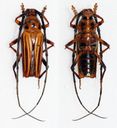
Oxymerus aculeatus is a medium to large-sized longhorned beetle (Cerambycidae) in the tribe Trachyderini, characterized by bright coloration and activity. The was described by Dupont in 1838 and is the most widely distributed member of its exclusively Neotropical , ranging from Nicaragua and the West Indies south to Bolivia and Uruguay. Several have been described, with the nominate subspecies O. a. aculeatus occurring throughout central, eastern, and southeastern Brazil. Like most cerambycids, larvae presumably develop in dead or dying wood, though specific plants remain undocumented. The species has been detected in Florida, raising concerns about potential establishment and economic impact as an wood-boring pest.
Pronunciation
How to pronounce Oxymerus aculeatus: /ˌɒksɪˈmɛrəs əˌkjuːliˈeɪtəs/
These audio files are automatically generated. While they are not always 100% accurate, they are a good starting point.
Identification
Belongs to tribe Trachyderini, distinguished by medium to large size, bright coloration, and habits. Within the Oxymerus, O. aculeatus is the most widespread , with distinguished by geographic distribution. The nominate subspecies O. a. aculeatus occurs in central, eastern, and southeastern Brazil. are notably long, especially in males. Specific diagnostic morphological features separating it from are not detailed in available sources.
Images
Habitat
Found resting on foliage of unidentified trees in forested areas. Larval presumed to be dead or dying wood, consistent with Cerambycidae.
Distribution
Native range extends from Nicaragua and the West Indies south to Bolivia and Uruguay. O. a. aculeatus is distributed throughout central, eastern, and southeastern Brazil. Detected in southern Florida (USA) as a potential non-native establishment.
Behavior
activity pattern. observed resting on underside of foliage. Larval development presumed to occur in dead or dying wood, typical of Cerambycidae.
Human Relevance
Detected in south Florida, raising concern from agricultural authorities about potential establishment as an pest. The Florida Department of Agriculture & Consumer Services has monitored the due to possible economic impacts as a wood-boring , though actual pest status remains unconfirmed.
Similar Taxa
- Other Oxymerus speciesNine other in the Oxymerus; O. aculeatus distinguished by being the most widely distributed species
- Other TrachyderiniShare general characteristics of medium to large size, bright coloration, and activity; distinguished by -level
Sources and further reading
- BugGuide
- Wikipedia
- GBIF taxonomy match
- iNaturalist taxon
- Catalogue of Life
- A Brazilian longhorned beetle – Oxymerus aculeatus | Beetles In The Bush
- Archives | Beetles In The Bush
- Bibliography | Beetles In The Bush
- Mallow munchers: Mallow sawfly, a.k.a. Hibiscus sawfly, Atomacera decepta — Bug of the Week
- Mallow munchers: Mallow sawfly, Atomacera decepta — Bug of the Week
- From the Bug of the Week Mailbag: Daddy-longlegs, the most venomous of all spiders? Opilionids and Pholcid spiders — Bug of the Week