
Rhopalophora meeskei
Casey, 1891
Rhopalophora meeskei is a longhorn beetle in the Cerambycidae, described by Casey in 1891. The has been documented in the southwestern United States and Mexico, with confirmed records from Arizona and observations in Guatemala and Honduras. Field observations indicate are active during summer months and are associated with flowering plants, particularly milkweeds (Asclepias spp.) and Ceanothus species.
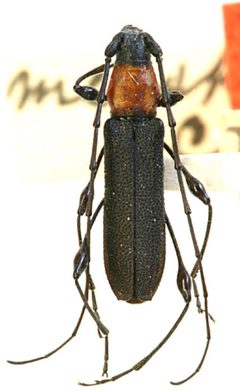
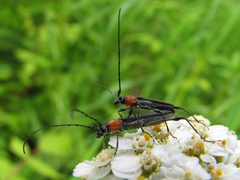
Pronunciation
How to pronounce Rhopalophora meeskei: //ˌroʊpələˈfɔrə ˈmɛskiː//
These audio files are automatically generated. While they are not always 100% accurate, they are a good starting point.
Images
Distribution
Documented from the southwestern United States (Arizona) and Middle America (Guatemala, Honduras). Specific localities in Arizona include the Chiricahua Mountains and Santa Rita Mountains.
Seasonality
have been observed in July and August in Arizona, indicating summer activity.
Host Associations
- Asclepias sp. - flower visitorObserved on flowers of narrow-leaved milkweed at Southwestern Research Station, Chiricahua Mountains, Arizona
- Ceanothus sp. - flower visitorCollected from flowers at approximately 7000 ft elevation in Montosa Canyon, Santa Rita Mountains, Arizona
- Rubus neomexicanus - flower visitorObserved on flowers along road from Southwestern Research Station to Rustler Park, Chiricahua Mountains, Arizona
Behavior
have been observed visiting flowers during daytime hours. Multiple individuals may occur on the same flowering plant.
Similar Taxa
- RhopalophoraOther members of the Rhopalophora share similar body form and flower-visiting habits; specific distinguishing features for R. meeskei are not documented in available sources
- StenosphenusCollected syntopically with Rhopalophora meeskei on Ceanothus flowers; both are cerambycine longhorn beetles with similar size and flower-visiting , but differ in antennal and pronotal characteristics