
Methia arizonica
Schaeffer, 1908
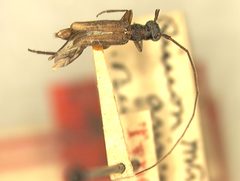
Methia arizonica is a of longhorn beetle ( Cerambycidae) described by Schaeffer in 1908. It belongs to the tribe Methiini within the Cerambycinae. The species is native to the southwestern United States, specifically Arizona, as indicated by its specific epithet. Like other members of the Methia, it is likely associated with woody vegetation, though detailed biological information remains limited.

Pronunciation
How to pronounce Methia arizonica: //ˈmiːθiə ˌærɪˈzoʊnɪkə//
These audio files are automatically generated. While they are not always 100% accurate, they are a good starting point.
Identification
Methia arizonica can be distinguished from other Methia by features of its elytral and antennal structure. Members of the Methia are typically small to medium-sized cerambycids with relatively short compared to many other longhorn beetles. The species name suggests occurrence in Arizona, which may help narrow identification geographically. Detailed diagnostic characters require examination of and comparison with related species such as M. mormona and M. inornata.
Images
Habitat
Based on the epithet and known distribution of , Methia arizonica likely inhabits arid and semi-arid woodland environments in the southwestern United States. Related species in the are associated with various woody plants including oaks and other hardwoods.
Distribution
United States (Arizona). The specific epithet and known records indicate occurrence in Arizona, with potential range extension into adjacent areas of the southwestern United States.
Similar Taxa
- Methia mormonaSimilar size and general ; both occur in southwestern North American aridlands. M. mormona is more widespread and has been documented from Utah and surrounding areas.
- Methia inornataAnother small Methia with which M. arizonica may be confused; differs in elytral punctation and geographic distribution.
More Details
Taxonomic History
The was described by Schaeffer in 1908 based on specimens from Arizona. The Methia currently contains approximately 20 species distributed primarily in North and Central America, with most species occurring in the southwestern United States and Mexico.