
Anoplocurius
Fisher, 1920
Species Guides
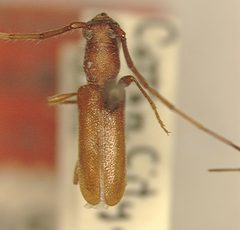
3Anoplocurius is a of longhorn beetles ( Cerambycidae) in the tribe Elaphidiini. The genus was established by Fisher in 1920 and contains three described : A. altus, A. canotiae, and A. incompletus. These beetles are native to North America, with records primarily from the southwestern United States. As members of the cerambycid Cerambycinae, they share characteristics with other elaphidiine beetles, though specific ecological details remain poorly documented.
Pronunciation
How to pronounce Anoplocurius: /ænəʊploʊˈkjʊəriəs/
These audio files are automatically generated. While they are not always 100% accurate, they are a good starting point.
Identification
Anoplocurius can be distinguished from other elaphidiine by features of the male genitalia and antennal structure, though specific diagnostic characters require examination of . The genus name refers to the unarmed (lacking spines or teeth) condition of certain structures. Accurate identification to species level requires reference to original species descriptions by Knull (1942), Fisher (1920), and Linsley (1942).
Images
Habitat
of Anoplocurius have been collected in arid and semi-arid regions of the southwestern United States. Anoplocurius canotiae is associated with Canotia holacantha (crucifixion thorn) in Arizona, suggesting -specific relationships with desert shrubs.
Distribution
Southwestern United States, specifically Arizona and adjacent regions. Anoplocurius altus occurs in Arizona, A. canotiae in Arizona, and A. incompletus in California.
Host Associations
- Canotia holacantha - plantSpecifically for Anoplocurius canotiae; other associations unknown
Similar Taxa
- ElaphidionBoth belong to tribe Elaphidiini and share general body form; Anoplocurius differs in antennal and genitalic characters
- AnelaphusSimilar elaphidiine with overlapping distribution; distinguished by structural details of and male genitalia
More Details
Taxonomic history
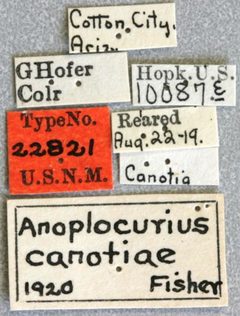
The was erected by Fisher in 1920 with A. canotiae as the type . Two additional species were described by Knull (1942) and Linsley (1942). The genus has received limited taxonomic attention since its original description.
Collection records
As of 2024, iNaturalist documents approximately 30 observations of this , indicating it is infrequently encountered or underreported. Museum specimens are sparse, with holdings primarily at the Smithsonian Institution and California Academy of Sciences.