
Xylotrechus sagittatus
(Germar, 1821)
Arrowhead Borer, Pine Bark Runner
Species Guides
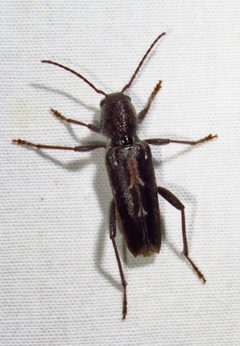
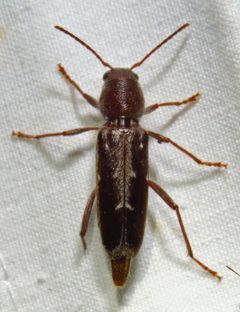
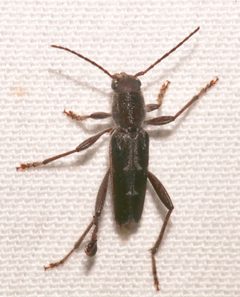
2Xylotrechus sagittatus is a of longhorn beetle (Cerambycidae) first described by Ernst Friedrich Germar in 1821. Known by the Arrowhead Borer and Pine Bark Runner, this is a classic pine-associated species in the southeastern United States. It is one of several wood-boring beetles frequently encountered on stressed or dying pine trees, where gather to mate and females lay .
Pronunciation
How to pronounce Xylotrechus sagittatus: //zaɪloʊˈtrɛkəs ˌsædʒɪˈteɪtəs//
These audio files are automatically generated. While they are not always 100% accurate, they are a good starting point.
Identification
Specific diagnostic features for distinguishing X. sagittatus from similar Xylotrechus and other cerambycine beetles are not documented in available sources. The species is one of several pine-associated wood-boring beetles found in the southeastern U.S., alongside species such as Acanthocinus nodosus, Chalcophora virginiensis, and Buprestis lineata.
Images
Habitat
Associated with pine forests, particularly where shortleaf pines (Pinus echinata) occur. are found on the trunks of pine trees, especially those that are stressed, dying, or in decline. The is attracted to plant volatiles emitted by such trees.
Distribution
Southeastern United States, with records from northern Arkansas at the limit of its distribution. GBIF records indicate presence in North America, including Canada and the United States (specifically Vermont).
Diet
Larvae are wood-borers that develop in pine trees, mining the phloem beneath the bark. likely feed on bark or other plant tissues, though specific adult feeding habits are not documented.
Host Associations
- Pinus echinata - larval shortleaf pine; larvae mine phloem beneath bark of dead or dying trees
Behavior
are strongly attracted to olfactory cues, particularly a 5:1 ratio of ethanol and turpentine, which mimics plant volatiles from stressed pines. Visual cues are secondary but important in host finding. Adults are active on tree trunks, where they search for mates. In trapping studies, more than 80% of captured individuals were found in elevated traps, suggesting a preference for flying to and landing on vertical trunk surfaces rather than the ground. The shows a more directed response to odor and visual cues compared to some related beetles, with less than 30% of individuals landing away from trap sources.
Ecological Role
As a wood-boring , contributes to the decomposition of dead and dying pine trees, recycling nutrients in forest . Part of the guild of pine-associated cerambycids and buprestids that specialize in exploiting stressed or trees.
Human Relevance
Has been studied for its behavioral responses to trapping cues, with potential applications in monitoring . Not documented as a significant economic pest of healthy timber, as it primarily attacks already stressed or dying trees.
Similar Taxa
- Acanthocinus nodosusAnother pine-associated cerambycid found on same trees, but distinguished by extremely long (up to 120 mm in males) and different coloration (slate gray with velvet black markings)
- Chalcophora virginiensisBuprestid frequently found on same stressed pine trees, but in different (Buprestidae) with distinct body form
- Buprestis lineataBuprestid sharing pine and attracted to same stressed , but with different characteristics and typically metallic coloration
More Details
Trapping efficiency
In field studies using Tedders traps, X. sagittatus showed capture rates exceeding 80%, with elevated traps performing better than ground-level traps. The demonstrated stronger directed toward odor and visual cue sources compared to Pachylobius picivorus.
Historical context
First described by German entomologist Ernst Friedrich Germar in 1821, making it one of the earlier-described North American cerambycids.
Sources and further reading
- BugGuide
- Wikipedia
- GBIF taxonomy match
- iNaturalist taxon
- NCBI Taxonomy
- Catalogue of Life
- Grasshopper Collections and Survey
- Arkansas | Beetles In The Bush | Page 2
- Zoosystematics and Evolution | Blog - Part 3
- Behavioral Response by Hylobius pales, Pachylobius picivorus (Coleoptera: Curculionidae) and Xylotrechus sagittatus (Coleoptera: Cerambycidae) to Trap Visual and Olfactory Cues and an Estimate of Trap Efficiency