
Xylotrechus quadrimaculatus
(Haldeman, 1847)
birch and beech girdler
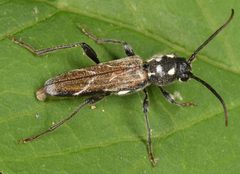
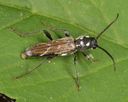
Xylotrechus quadrimaculatus is a longhorn beetle in the Cerambycidae, described by Haldeman in 1847. It is commonly known as the birch and beech girdler, indicating its association with these trees. The occurs in eastern North America, with documented records from Canada and the United States.
Pronunciation
How to pronounce Xylotrechus quadrimaculatus: //ˌzaɪloʊˈtrɛkəs ˌkwɒdrɪˌmækjuˈleɪtəs//
These audio files are automatically generated. While they are not always 100% accurate, they are a good starting point.
Identification
The specific epithet "quadrimaculatus" (four-spotted) suggests the presence of four distinct maculations or spots on the , a common diagnostic feature in the Xylotrechus. in this genus typically exhibit elongated bodies with banded or spotted patterns on the wing covers. Definitive identification requires examination of antennal proportions, pronotal shape, and detailed elytral patterning.
Images
Habitat
Associated with deciduous forests, particularly those containing birch (Betula) and beech (Fagus) trees, as indicated by its . Larvae develop in woody substrates, likely under bark or in dead and dying branches of trees.
Distribution
Eastern North America. Documented from Canadian provinces: Manitoba, New Brunswick, Nova Scotia, and Ontario. Distribution in the United States inferred from contiguous range and tree distribution, though specific state records require verification.
Diet
Larvae feed on the wood of birch and beech trees. of Xylotrechus typically feed on pollen, nectar, or bark exudates, though specific adult feeding habits for this species are not documented.
Host Associations
- Betula - larval birch
- Fagus - larval beech
Life Cycle
Complete with , larval, pupal, and stages. Larvae are wood-borers, developing under bark or in wood of trees. Developmental timing and number of per year are not documented.
Ecological Role
As a wood-boring , larvae contribute to nutrient cycling by breaking down dead and dying wood. The may also serve as a food source for woodpeckers and other that prey on cerambycid larvae.
Human Relevance
The "girdler" suggests potential for minor damage to trees, though the is not considered a significant forest pest. May occasionally affect ornamental birch or beech plantings.
Similar Taxa
- Xylotrechus colonusSimilar size and spotted elytral pattern; distinguished by details of maculation arrangement and pronotal sculpturing
- Xylotrechus undulatusOverlapping range and associations; distinguished by wavy versus quadrate elytral markings
- Clytus speciesSimilar banded or spotted appearance and shared tribe Clytini; distinguished by antennal proportions and body shape
More Details
Taxonomic History
Described by Samuel Stehman Haldeman in 1847, an early American naturalist who contributed significantly to North American entomology. The has remained in the Xylotrechus without major taxonomic revision.
Collection Records
GBIF distribution records indicate presence across multiple Canadian provinces, suggesting a relatively broad eastern North American range. iNaturalist observations are sparse (15 records as of source date), indicating it may be underreported or genuinely uncommon.
Sources and further reading
- BugGuide
- Wikipedia
- GBIF taxonomy match
- iNaturalist taxon
- Catalogue of Life
- Mosquitoes, Malaria and the Civil War | Bug Squad
- Meloidae Holdings | Entomology Research Museum
- Plant Pollen May Be Important Food Source for Some Mosquitoes in U.S.
- How One State's Mosquito Data Could Reduce Risk of Malaria Returning to U.S.
- Bug Eric: Mosquitoes
- Spring’s first mosquitoes and what we might expect this year with Zika Virus and the Yellow Fever Mosquito, Aedes aegypti — Bug of the Week