
Placosternus difficilis
(Chevrolat, 1862)
Mesquite Borer
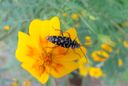
Placosternus difficilis is a wood-boring longhorn beetle in the Cerambycidae. exhibit , resembling black and yellow . The is strongly associated with mesquite trees (Prosopis spp.), though it has been recorded from multiple plants and is considered . Adults feed on nectar and pollen. The species ranges from the southwestern United States through Mexico and into Central America and the Caribbean.
Pronunciation
How to pronounce Placosternus difficilis: //ˌplækoʊˈstɜrnəs dɪˈfɪsɪlɪs//
These audio files are automatically generated. While they are not always 100% accurate, they are a good starting point.
Identification
Distinguished from other Cerambycidae by its -like black and yellow coloration. The combination of wood-boring habit in mesquite and wasp-mimicking appearance is characteristic. Specific diagnostic features separating it from congeneric are not documented in available sources.
Images
Appearance
-like in appearance with black and yellow coloration. Body form slender and elongate, consistent with the Clytini tribe. Specific morphological details of size, antennal length, and exact pattern elements are not documented in available sources.
Habitat
Associated with mesquite-dominated environments. attracted to freshly cut or broken limbs and logs of mesquite trees. Specific requirements beyond tree association are not documented.
Distribution
United States (California to Texas), Mexico, Honduras, Cuba, and the Bahamas. GBIF records also indicate presence in South America.
Diet
feed on nectar and pollen. Larvae are wood-borers, developing within mesquite trees and other recorded .
Host Associations
- Prosopis - larval Primary ; attracted to freshly cut or broken limbs
- multiple hosts - larval Considered with records from range of beyond mesquite
Life Cycle
Larvae deposited in mesquite trees and other where they develop as wood-borers. Specific details of -laying , larval instars, site, and developmental duration are not documented in available sources.
Behavior
attracted to freshly cut or broken limbs and logs of mesquite trees. Specific details of mating , , or other behaviors are not documented.
Ecological Role
Wood-borer in mesquite and other trees; contributes to decomposition of damaged or stressed wood. Specific ecological impacts or interactions are not documented.
Human Relevance
May be encountered in urban and suburban settings where mesquite trees are present. No specific economic importance or pest status is documented beyond general wood-boring habit.
Similar Taxa
- Clytini tribe membersShare -mimicking appearance and wood-boring habits; specific distinguishing features not documented
- Other Placosternus speciesCongeneric may share similar and habits; specific diagnostic differences not documented in available sources
More Details
Nomenclature
Authored by Chevrolat in 1862. The specific epithet 'difficilis' (Latin for 'difficult') may allude to identification challenges or collection difficulty.
Taxonomic placement
Member of tribe Clytini within Cerambycinae; Clytini is well-known for -mimicking .
Sources and further reading
- BugGuide
- Wikipedia
- GBIF taxonomy match
- iNaturalist taxon
- Catalogue of Life
- Honey Locust Borer | Beetles In The Bush
- Buprestidae | Beetles In The Bush | Page 9
- taxonomy | Beetles In The Bush | Page 4
- jewel beetles | Beetles In The Bush | Page 8
- During Quarantine, an Entomologist Takes a Closer Look at a New Invasive Ant Species