
Semanotus amplus
(Casey, 1912)
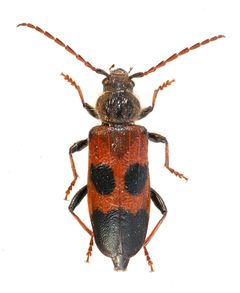
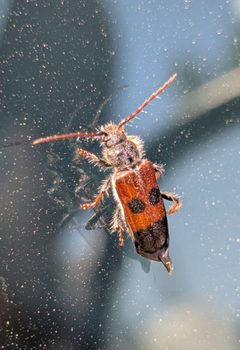
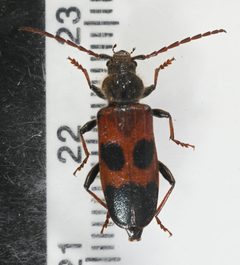
Semanotus amplus is a of longhorned beetle ( Cerambycidae) in the tribe Callidiini. It is a wood-boring associated with coniferous , particularly junipers. The species was described by Casey in 1912 and is known from western North America. Field observations indicate it infests living or recently dead wood, with larvae creating galleries in the sapwood. have been encountered at night on host tree trunks.
Pronunciation
How to pronounce Semanotus amplus: /sɛˈmænəˌtʊs ˈæmpləs/
These audio files are automatically generated. While they are not always 100% accurate, they are a good starting point.
Identification
Semanotus amplus can be distinguished from related Semanotus by its larger size (specific epithet "amplus" refers to this). The Semanotus is characterized by a somewhat cylindrical body form and that are typically shorter than the body. are generally dark in coloration. Accurate identification to species level requires examination of morphological details and comparison with or authoritative keys.
Images
Habitat
Associated with coniferous woodland , particularly those containing Juniperus . Found in montane and submontane environments. Field records indicate presence in pinyon-juniper woodlands and adjacent ponderosa pine forests at elevations around 8300 ft (2500 m).
Distribution
Western North America. Distribution records from Canada (CA) and United States (US). Specific localities include Kyle Canyon in the Spring Mountains of Nevada.
Seasonality
have been observed in June. Activity likely corresponds with warmer months, though specific is poorly documented.
Host Associations
- Juniperus osteosperma - breeding Larvae develop in wood; found on trunk at night
Behavior
Nocturnally active on tree trunks. have been observed on the trunks of living Utah juniper trees at night, suggesting they may be attracted to stressed or infested trees. Larvae are wood-borers that create galleries in the sapwood.
Ecological Role
Wood-boring that contributes to decomposition of coniferous wood and nutrient cycling in forest . May serve as prey for woodpeckers and other .
Human Relevance
Of interest to coleopterists and forest entomologists. Not known to be a significant economic pest. Infested wood may be collected by entomologists for rearing specimens.
Similar Taxa
- Semanotus juniperiSimilar size, shares plant (Juniperus osteosperma), and occurs in same geographic region. S. juniperi is distinguished by different and is considered rarer.
- Semanotus caseyiClosely related in same with overlapping distribution; requires careful morphological examination to distinguish.