
Phymatodes nitidus
LeConte, 1874
sequoia cone borer
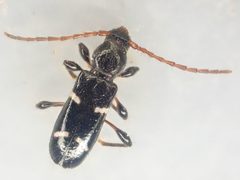
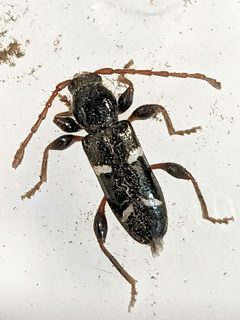
Phymatodes nitidus is a longhorn beetle ( Cerambycidae) native to western North America. The is notable for its specialized reproductive association with conifers, specifically laying on giant sequoia and coast redwood cones. Larvae burrow into these cones to develop. The species was described by LeConte in 1874. Phymatodes mojavensis was synonymized under P. nitidus in 2010.
Pronunciation
How to pronounce Phymatodes nitidus: //faɪˈmætədiːz ˈnɪtɪdəs//
These audio files are automatically generated. While they are not always 100% accurate, they are a good starting point.
Images
Habitat
Associated with coniferous forests dominated by giant sequoia (Sequoiadendron giganteum) and coast redwood (Sequoia sempervirens).
Distribution
Pacific coastal region of North America, from southern California north to British Columbia, Canada.
Host Associations
- Sequoiadendron giganteum - reproductive laid on cones, larvae burrow inside
- Sequoia sempervirens - reproductive laid on cones, larvae burrow inside
Life Cycle
are deposited on the surface of cones. Larvae burrow into the cones to feed and develop. Specific details regarding and timing are not documented in available sources.
Similar Taxa
- Phymatodes mojavensisFormerly recognized as distinct , synonymized under P. nitidus by Swift & Ray 2010 based on examination of .
More Details
Nomenclatural history
Phymatodes mojavensis was synonymized under P. nitidus in 2010 (Swift & Ray, Zootaxa 2448:35–52). This revision corrected previous taxonomic confusion resulting from authors not examining when describing new .
Common name origin
The 'sequoia cone borer' directly references the ' reproductive habit of burrowing into sequoia cones.