Promoresia
Sanderson, 1954
Species Guides
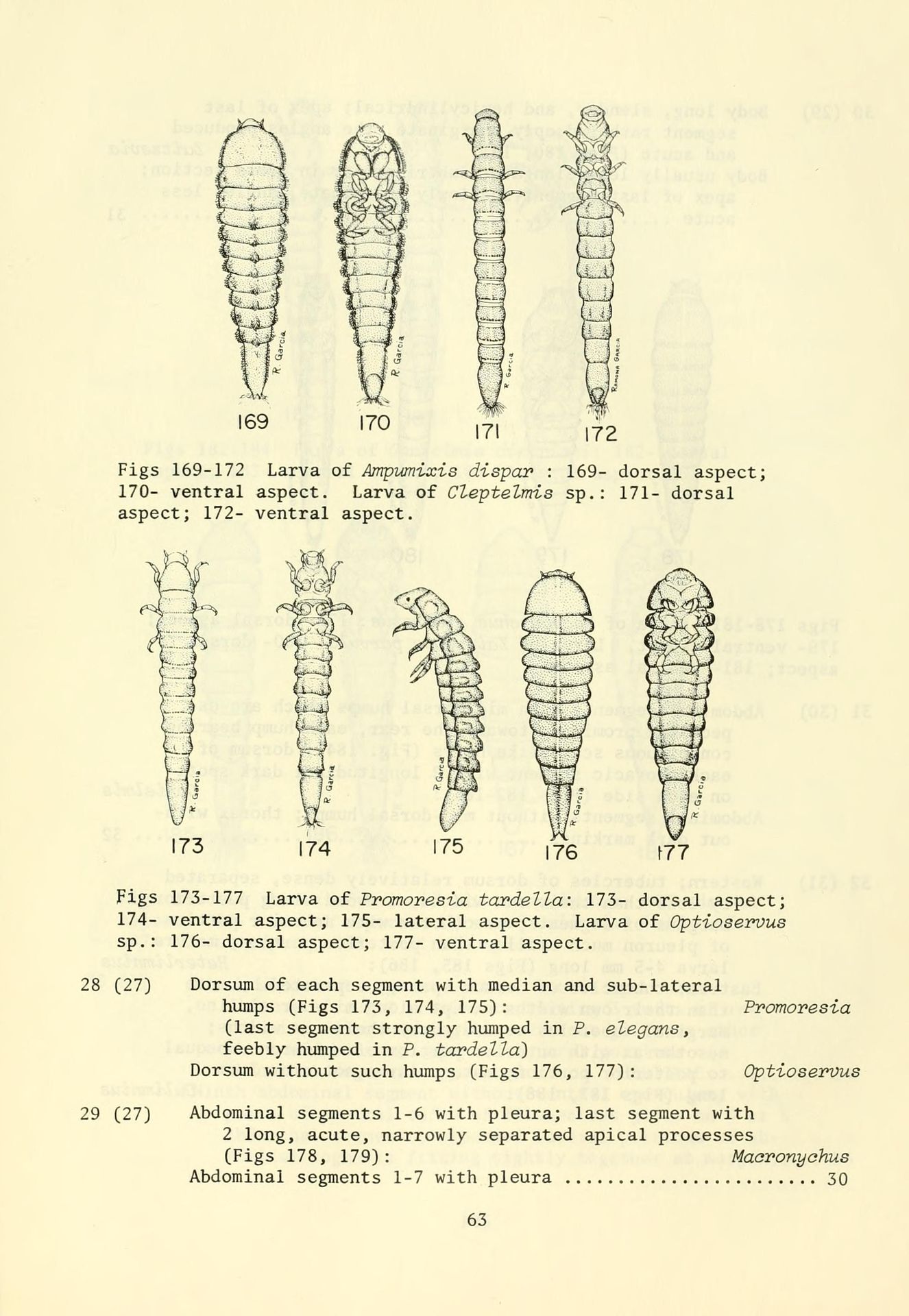
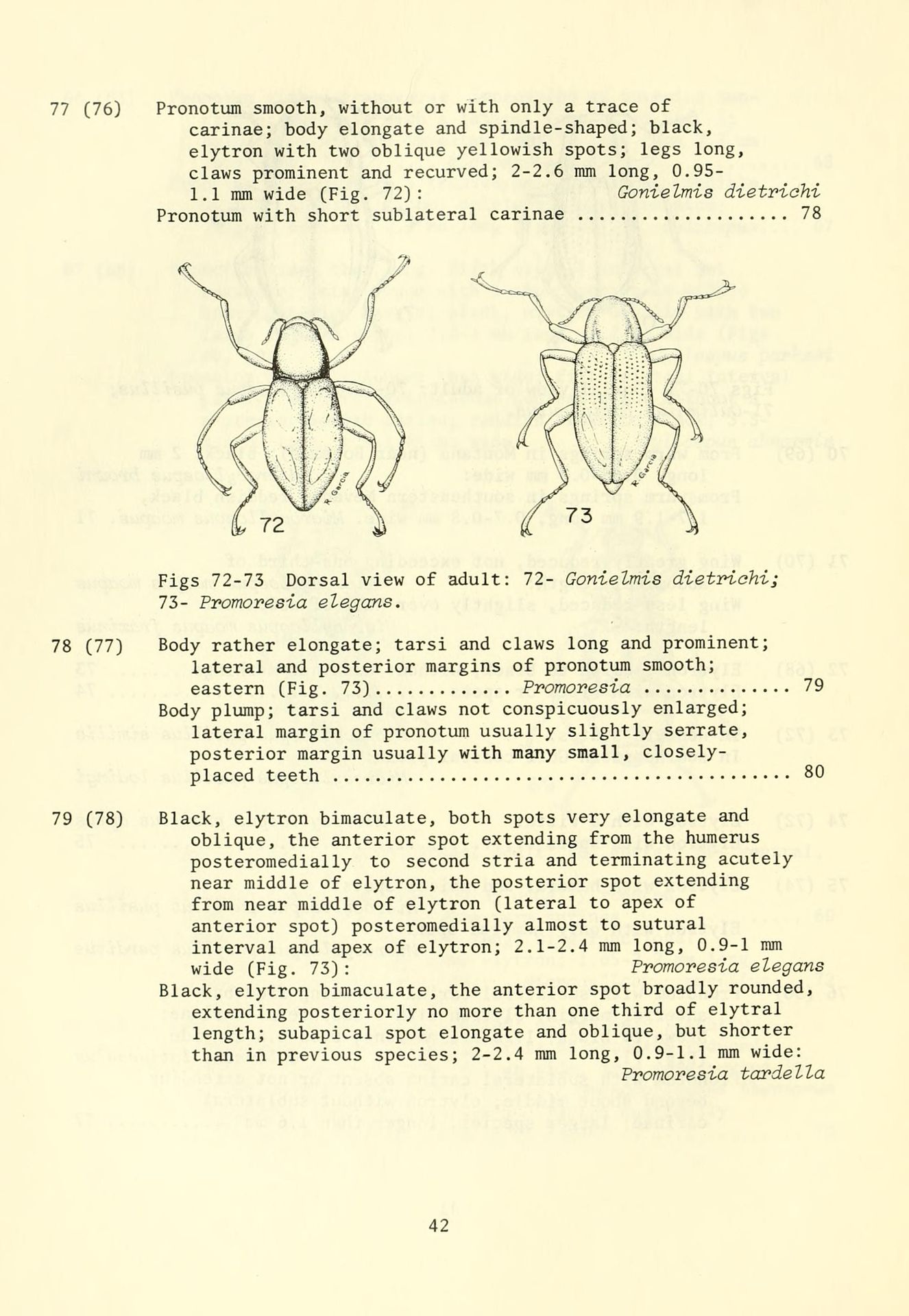
2Promoresia is a of riffle beetles in the Elmidae, containing at least two described : P. elegans and P. tardella. The genus was established by Sanderson in 1954. Some taxonomic sources treat Promoresia as a synonym of Optioservus, indicating taxonomic uncertainty.
Pronunciation
How to pronounce Promoresia: /pro.moˈre.si.a/
These audio files are automatically generated. While they are not always 100% accurate, they are a good starting point.
Identification
Promoresia are small aquatic beetles in the riffle beetle Elmidae. They possess the characteristic features of Elmidae: elongated, somewhat cylindrical bodies; with 11 segments; and with five segments. The two described species, P. elegans and P. tardella, would require examination of specific morphological characters for separation, though these are not documented in available sources.
Images
Habitat
Distribution
Distribution records indicate presence in the United States, specifically including Vermont. The likely has a broader North American distribution given the known ranges of related elmid genera, though specific locality data beyond Vermont are not documented in available sources.
Ecological Role
As riffle beetles, Promoresia contribute to nutrient cycling in stream through their feeding activities on periphyton and detritus. They serve as prey for larger aquatic and fish, forming part of the benthic in fast-flowing freshwater .
Human Relevance
Promoresia has no documented direct economic or medical importance to humans. Like other elmid beetles, in this may serve as bioindicators of water quality due to their dependence on clean, well-oxygenated running water.
Similar Taxa
- OptioservusGBIF and Catalogue of Life list Promoresia as a synonym of Optioservus, suggesting these are taxonomically conflated or closely related. Optioservus is another elmid genus with similar and preferences.
- HeterlimniusCatalogue of Life places Promoresia within the Heterlimnius group in its classification hierarchy, indicating close phylogenetic relationship and potential morphological similarity.
- Other Elmidae generaPromoresia shares the general body plan and aquatic lifestyle common to all riffle beetles, requiring careful examination of genitalia and other fine morphological details for definitive identification.
More Details
Taxonomic Status
The taxonomic status of Promoresia is contested. NCBI recognizes it as a valid , while GBIF and Catalogue of Life treat it as a synonym of Optioservus. This discrepancy reflects ongoing revisionary work in Elmidae .
Species Included
Two are consistently attributed to this : Promoresia elegans (LeConte, 1852) and Promoresia tardella (Fall, 1925). These species epithets suggest historical descriptions under other generic placements prior to Sanderson's 1954 establishment of Promoresia.