Acmaeoderopsis
Barr, 1974
Species Guides
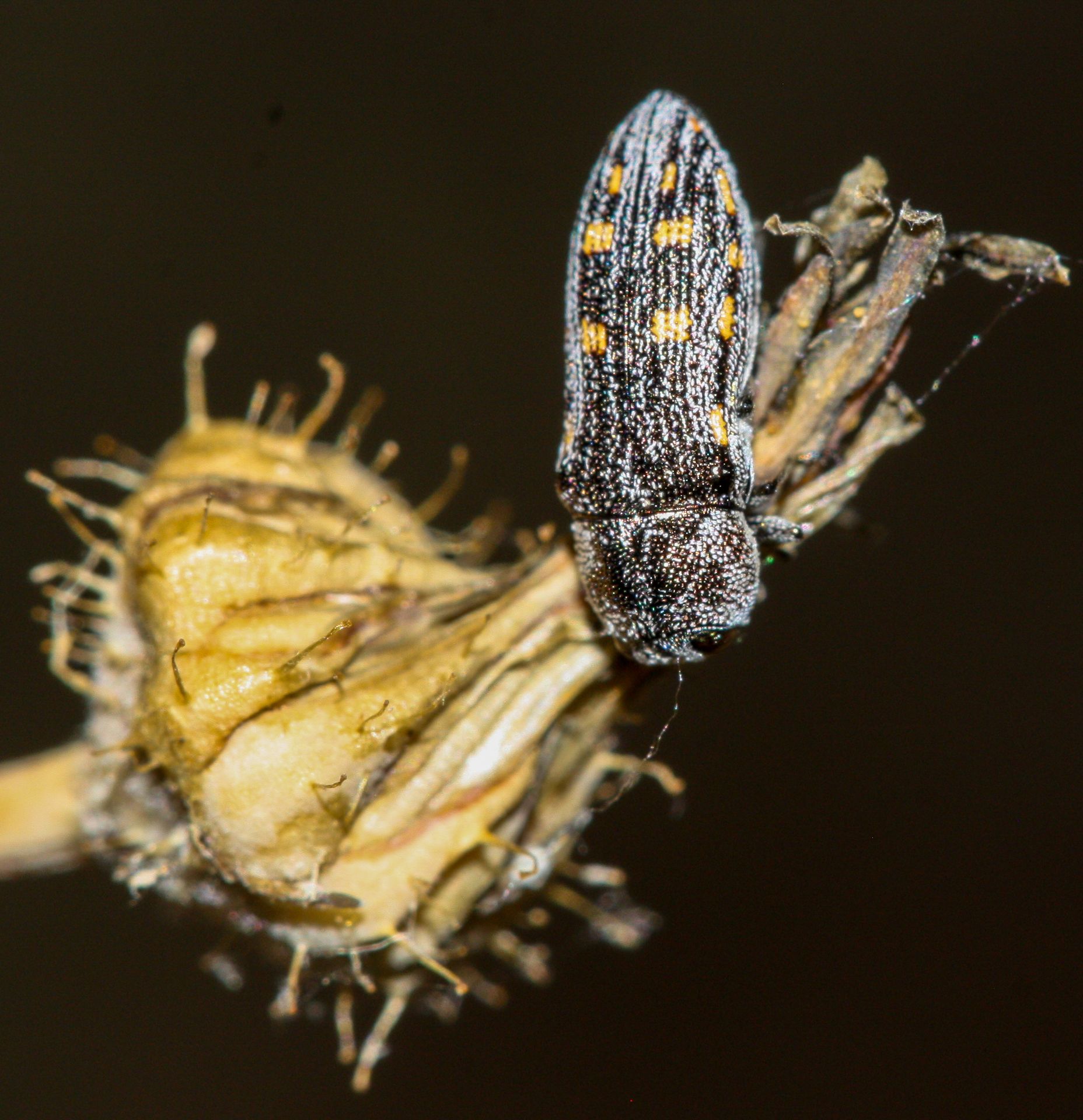
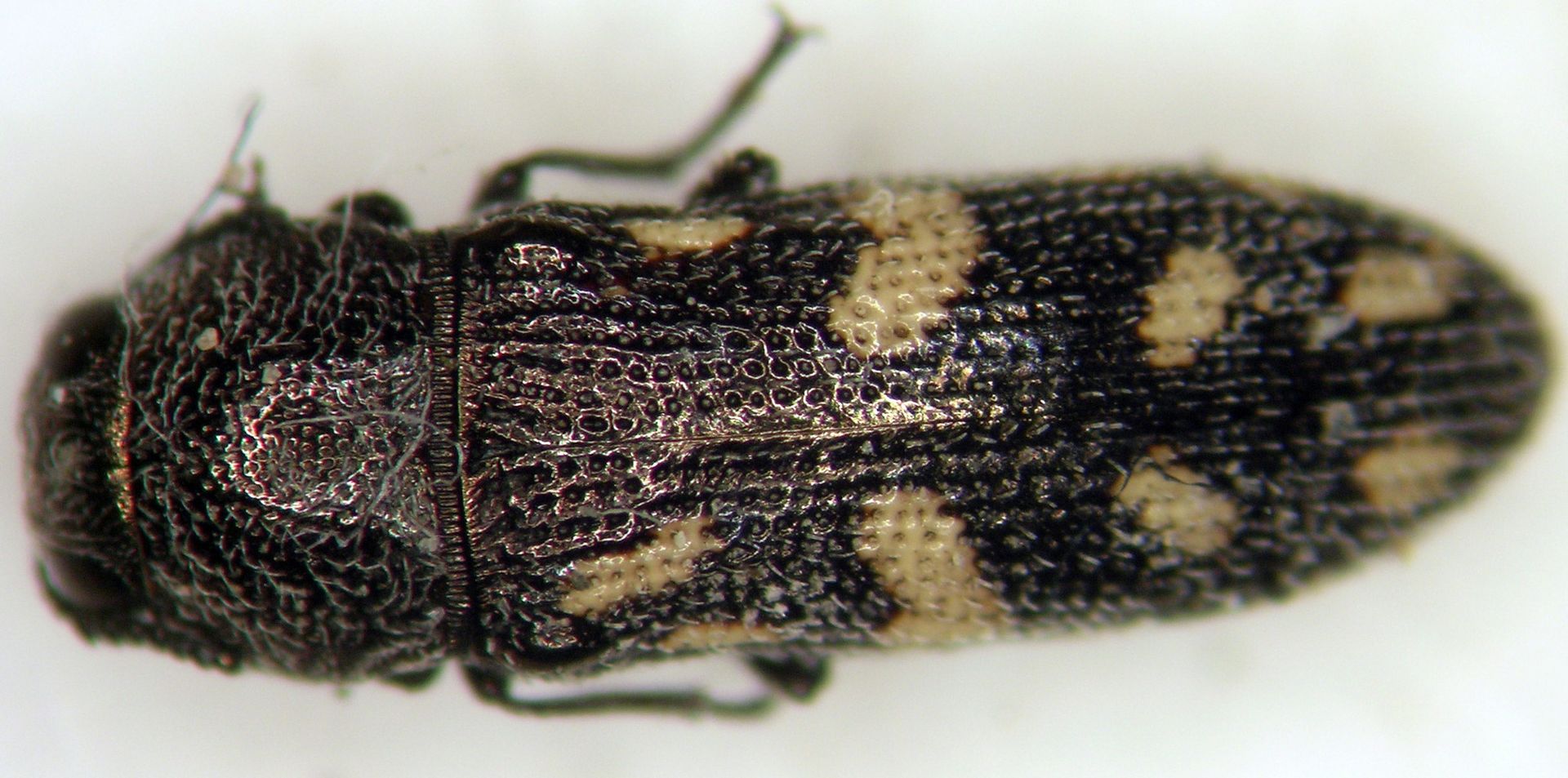
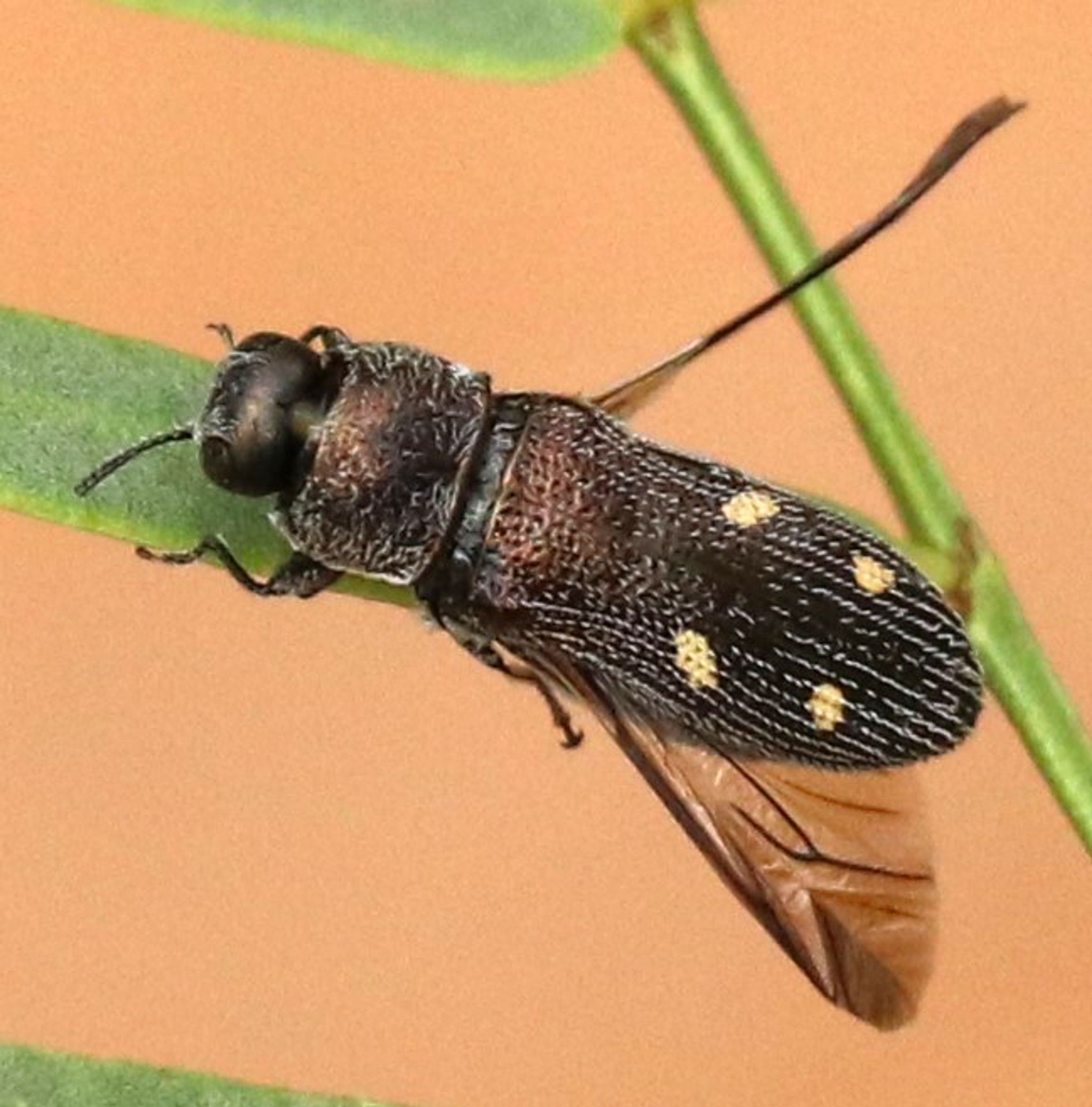
11Acmaeoderopsis is a of jewel beetles ( Buprestidae) containing approximately 12 described distributed in the southwestern United States and northern Mexico. The genus was established by Barr in 1974 and includes species associated with mesquite (Prosopis) and other woody legumes. are small, typically vittate (striped) buprestids that are active during hot summer months and can be collected by beating vegetation.
Pronunciation
How to pronounce Acmaeoderopsis: /ˌæk.miːoʊ.dɛˈrɒp.sɪs/
These audio files are automatically generated. While they are not always 100% accurate, they are a good starting point.
Identification
Acmaeoderopsis are small buprestid beetles, generally 5–10 mm in length, with typically marked by longitudinal pale stripes (vittate pattern). They resemble small Acmaeodera species but can be distinguished by genitalic characters and subtle differences in pronotal shape. The is most reliably separated from similar small vittate buprestids (Acmaeodera, Acmaeoderella) by examination of male genitalia and specific associations with Prosopis and related leguminous trees.
Images
Habitat
in this are primarily associated with arid and semi-arid environments of the southwestern United States and northern Mexico. They inhabit desert scrub, sand dune systems, and dry woodland where their plants, particularly mesquite (Prosopis glandulosa) and related legumes, occur. The genus shows particular affinity for sandy including the Mescalero Sand Dunes of New Mexico and sand dune systems of west Texas.
Distribution
Southwestern United States (primarily New Mexico, Texas, Arizona) and northern Mexico. Specific have more restricted ranges: A. prosopis is known from west Texas and southeastern New Mexico; A. chisosensis from the Chisos Mountains of Texas; A. hassayampae from Arizona; A. hualpaiana from Arizona and New Mexico; A. junki from Mexico; A. rockefelleri from Texas and Mexico; A. varipilis and A. paravaripilis from Arizona and New Mexico; A. vaga, A. westcotti from Arizona; A. guttifera more broadly distributed across the southwestern U.S.; A. hulli from Texas.
Seasonality
are active during the hottest months of summer, typically June through August, with peak activity coinciding with summer monsoon rains. Activity is strongly tied to rainfall patterns that stimulate plant growth and adult .
Host Associations
- Prosopis glandulosa - Primary ; collected by beating mesquite branches
- Prosopis - -level association for multiple
Behavior
are and highly active, flying readily when disturbed. They are collected most effectively by beating vegetation, particularly mesquite, onto a sheet. When beating, adults frequently fly immediately upon impact rather than dropping to the sheet, making collection challenging. They have been observed flying to the tips of high branches and can be captured with aerial nets as they fly in to land. hiding is suspected but not documented; evening beating of mesquite has yielded other buprestids but not Acmaeoderopsis.
Ecological Role
Larval stages are presumed to be wood-borers in living or dead branches of legumes, contributing to nutrient cycling and acting as secondary colonizers of stressed or damaged woody vegetation. The precise ecological role of as possible or herbivores is unknown.
Human Relevance
No direct economic importance. Of interest to coleopterists studying southwestern U.S. buprestid diversity. Some are relatively uncommon in collections due to their specialized requirements and challenging collection .
Similar Taxa
- AcmaeoderaSimilar small size and vittate elytral pattern; distinguished by male genitalia and preferences
- AcmaeoderellaSimilar small vittate buprestids; distinguished by subtle morphological differences and genitalic characters
- ParatyndarisSmall buprestids collected from similar and ; distinguished by body form and elytral
More Details
Taxonomic History
The was erected by Barr in 1974 to accommodate previously placed in Acmaeodera that showed distinct genitalic and morphological differences. The type species is Acmaeoderopsis guttifera (LeConte, 1859), originally described as Acmaeodera guttifera. Several species were described by Knull in the mid-20th century (A. chisosensis, A. hualpaiana, A. hulli, A. jaguarina, A. hassayampae), reflecting the period of active buprestid in North America.
Field Collection Notes
Based on field observations in 2018, Acmaeoderopsis prosopis was found to be extraordinarily active and difficult to collect by standard beating techniques. Collectors had greater success using aerial nets to capture as they flew to high mesquite branches, or by beating and immediately netting flying individuals. Heat stress on collectors is a significant factor, with activity ceasing when temperatures exceed 40°C.