
Acmaeoderina
Genus Guides
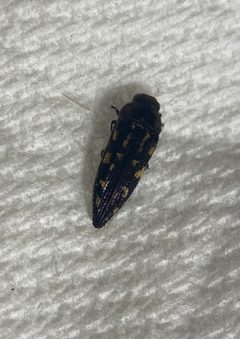
3Acmaeoderina is a subtribe of jewel beetles ( Buprestidae) within the tribe Acmaeoderini. Members of this group are characterized by their association with the Acmaeodera generic lineage. The subtribe was established by Kerremans in 1893 and includes such as Acmaeodera, Acmaeoderopsis, and Anambodera. These beetles are typically small to medium-sized with metallic coloration, and their larvae are wood-borers in various hardwood trees.


Pronunciation
How to pronounce Acmaeoderina: /æk.miːəʊˈdɛrɪ.nə/
These audio files are automatically generated. While they are not always 100% accurate, they are a good starting point.
Identification
Members of Acmaeoderina can be distinguished from other subtribes in Acmaeoderini by their placement in the Acmaeodera generic group sensu Volkovitsh 2001. The subtribe includes with varied body forms, from the relatively common and widespread Acmaeodera to the more specialized Acmaeoderopsis and Anambodera. Specific diagnostic features for the subtribe as a whole are not well-documented in available literature.
Images
Habitat
vary by within the subtribe. Acmaeodera are found in diverse environments including forests, woodlands, and scrublands, with larvae developing in dead or dying hardwood branches. Acmaeoderopsis species have been associated with specific plants such as Prosopis (mesquite). Anambodera species occur in arid and semi-arid regions of western North America.
Distribution
The subtribe has a primarily Nearctic distribution, with greatest diversity in western and southwestern North America. Some extend into Central America, and the subtribe's distribution largely mirrors that of the tribe Acmaeoderini, which is most diverse in North America with some representation in the Neotropics.
Diet
of Acmaeodera and related have been observed feeding on pollen and nectar from flowers. Larvae are wood-borers, developing in dead or dying branches and twigs of hardwood trees including oaks (Quercus), birches (Betula), willows (Salix), and other deciduous trees. Specific larval vary by genus and .
Host Associations
- Quercus - larval multiple oak used by various Acmaeodera species
- Betula - larval including river birch (Betula nigra)
- Salix - larval willow
- Prosopis - larval mesquite; for Acmaeoderopsis prosopis
- Cercis - larval eastern redbud (Cercis canadensis) recorded for some
Life Cycle
Development follows the typical buprestid pattern: laid on or near material, larval development in wood with multiple instars, within the larval gallery, and through exit holes. Adults are generally active during spring and summer months. Specific timing varies by and geographic location.
Behavior
are and often observed on flowers or foliage. Some exhibit -mimicry in related buprestid groups, though this is not specifically documented for Acmaeoderina. Larval consists of tunneling in dead wood, creating galleries that may be packed with .
Ecological Role
As larvae, members of this subtribe contribute to wood decomposition and nutrient cycling in forest . Their association with dead and dying wood places them in the successional of saproxylic organisms. may serve as when feeding on flowers.
Human Relevance
Some are collected for their attractive metallic coloration. The subtribe includes species of interest to entomologists studying North American buprestid diversity. No significant economic impact as pests has been documented, though related buprestids can occasionally damage stressed trees.
Similar Taxa
- AcmaeoderoideaAnother subtribe in Acmaeoderini; distinguished by different generic composition and morphological characteristics, though specific differences require detailed examination
- HaplostethinaSubtribe in Acmaeoderini containing the Mastogenius; differs in body form and associations
More Details
Taxonomic History
The subtribe was established by Kerremans in 1893. Modern classification follows Volkovitsh (2001) and subsequent phylogenetic treatments that recognize the Acmaeodera generic lineage within the Acmaeoderini.
Included Genera
The subtribe includes Acmaeodera (the largest with numerous ), Acmaeoderopsis (small genus with specialized associations), and Anambodera (western North American aridland species).