
Hippomelas sphenicus
(LeConte, 1854)
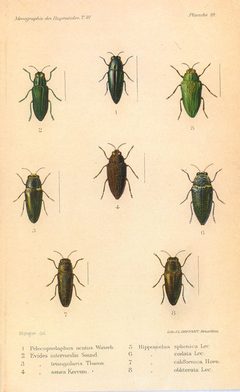
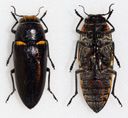
Hippomelas sphenicus is a large metallic wood-boring beetle ( Buprestidae) found in the southwestern United States and Mexico. The is associated with desert , particularly areas with mesquite (Prosopis glandulosa) and sweet acacia (Acacia rigida). are active during summer months and are known to be strong fliers, making them challenging to collect. The species was first described by LeConte in 1854.
Pronunciation
How to pronounce Hippomelas sphenicus: //ˌhɪpoʊˈmɛləs ˈsfɛnɪkəs//
These audio files are automatically generated. While they are not always 100% accurate, they are a good starting point.
Identification
A large buprestid . Distinguished from by its distribution in the southwestern United States and Mexico. Similar to Hippomelas planicauda but occurs in different geographic areas and on different plants.
Images
Habitat
Desert flats and thorn-scrub with woody vegetation including mesquite (Prosopis glandulosa), sweet acacia (Acacia constricta), and three-pronged joint-fir (Ephedra trifurca).
Distribution
Southwestern United States (Arizona) and Mexico. Documented from desert flats east of Portal, Arizona in the Chiricahua Mountains region.
Seasonality
Active during summer months. Observed in late July/early August during monsoon season in Arizona.
Behavior
are extremely flighty and difficult to catch. Strong fliers that are readily disturbed from plants.
Similar Taxa
- Hippomelas planicaudaSimilar large buprestid , but associated with velvetpod mimosa (Mimosa dysocarpa) in higher elevation oak woodland and canyon rather than desert flats.
- Gyascutus caelatusAnother large buprestid found sympatrically on sweet acacia (Acacia rigidula), but distinguished by different and presumably different .