
Hippomelas planicauda
Casey, 1909
Hippomelas planicauda is a large buprestid ( Buprestidae) found in the southwestern United States and Mexico. The is associated with leguminous plants, particularly Mimosa dysocarpa (velvetpod mimosa), on which are frequently collected by beating flowering branches. It occurs in desert scrub and canyon of southeastern Arizona and adjacent regions, where it is often found in company with other large buprestids such as Hippomelas sphenicus and Gyascutus caelatus.
Pronunciation
How to pronounce Hippomelas planicauda: /ˌhɪˈpoʊmɛˌlæs ˌplænɪˈkɔːdə/
These audio files are automatically generated. While they are not always 100% accurate, they are a good starting point.
Identification
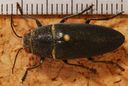
A large, robust buprestid . Distinguished from the sympatric Hippomelas sphenicus by the flattened (rather than cylindrical) caudal portion of the body, as indicated by the specific epithet. are active on flowering plants and can be collected by beating branches onto a sheet.
Images
Habitat
Desert scrub and canyon in the southwestern United States; specifically recorded from sandstone glades, desert flats, and canyon systems with leguminous vegetation. Associated with areas supporting Mimosa dysocarpa and other acacias.
Distribution
North America: recorded from southeastern Arizona (Chiricahua Mountains, Santa Rita Mountains, Huachuca Mountains) and adjacent regions; distribution extends into Mexico. GBIF records indicate presence in the Nearctic and Neotropic regions.
Seasonality
active during summer monsoon season; recorded in July and August in Arizona.
Diet
feed on flowers of plants, particularly Mimosa dysocarpa; larval diet unknown but presumably develops in roots or stems of leguminous hosts.
Host Associations
- Mimosa dysocarpa - plantvelvetpod mimosa; beaten from flowering branches
- Acacia rigida - plantsweet acacia
- Prosopis glandulosa - plantmesquite
Behavior
are and highly active on flowering plants. Frequently found in mating pairs on host vegetation. Extremely flighty and difficult to capture when disturbed. Not attracted to ultraviolet light traps.
Human Relevance
Collected by entomologists as a desirable large buprestid; one of the 'charismatic' sought by collectors in the southwestern United States.
Similar Taxa
- Hippomelas sphenicussimilar size and distribution, but distinguished by cylindrical (not flattened) caudal body shape; both occur sympatrically on Acacia and Prosopis
- Gyascutus caelatussimilar large size, flighty , and occurrence on desert legumes, but different with distinct body form
- Hippomelas martinicongeneric with similar preferences; H. martini more recently described and less frequently encountered