
Chalcophora fortis
LeConte, 1860
Strong Jewel Beetle
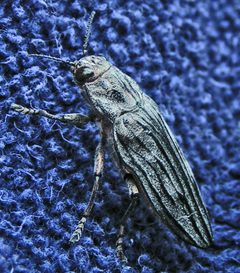
Chalcophora fortis is a large jewel beetle in the Buprestidae, commonly known as the Strong Jewel Beetle. It is one of five North American in the Chalcophora, a group of sculptured pine borers characterized by their metallic coloration and heavily sculptured bodies. The species occurs in eastern North America, where it is associated with pine forests. Like other members of the genus, its dramatic sculpturing and metallic sheen serve a cryptic function, helping it blend with the bark of dead or dying pine trees.
Pronunciation
How to pronounce Chalcophora fortis: /ˌkælkəˈfɔːrə ˈfɔːrtɪs/
These audio files are automatically generated. While they are not always 100% accurate, they are a good starting point.
Identification
Chalcophora fortis can be distinguished from other North American Chalcophora by a combination of morphological features. Based on the revision by Maier & Ivie (2013), the five North American species are separated by coloration, presence or absence of ridges on the front legs, presence or absence of spines at the elytral apices, and male genitalia structure. Chalcophora fortis occurs in the eastern United States and Canada, with records from New York and other northeastern localities. It is most similar to C. virginiensis and C. liberta, but differs in specific details of pronotal and elytral sculpturing and coloration.
Images
Habitat
Associated with pine forests. are found on the trunks of dead or dying pine trees, where their sculptured and metallic bodies provide camouflage against the flaked, graying bark of stressed or declining trees.
Distribution
North America, specifically the eastern United States and Canada. Documented from New York and other northeastern localities. The Chalcophora shows a distinct east-west disjunction across the Great Plains, with C. fortis and three other in the east and C. angulicollis in the west.
Host Associations
- Pinus - larval Larvae develop in dead or dying pine trees. are found on pine trunks.
Life Cycle
Larvae are wood-borers that develop within the bark and wood of dead or dying pine trees. emerge and are active on tree trunks.
Ecological Role
As a wood-boring , larvae contribute to the decomposition of dead pine wood and nutrient cycling in forest . The is part of the guild of insects that colonize stressed or recently dead conifers.
Human Relevance
No significant economic or medical importance documented. Like other Chalcophora , it is primarily of interest to coleopterists and naturalists due to its large size and striking metallic appearance.
Similar Taxa
- Chalcophora virginiensisOverlapping eastern distribution and similar large size, metallic coloration, and sculptured appearance. Distinguished by subtle differences in pronotal and elytral sculpturing, coloration, and male genitalia.
- Chalcophora libertaEastern North American distribution and similar association with pines. Distinguished by specific morphological features including details of elytral sculpturing and male genitalia.
- Chalcophora georgianaSoutheastern distribution and similar pine-associated . Distinguished by geographic range and morphological details.
More Details
Taxonomic History
The Chalcophora was revised by Maier & Ivie (2013), who provided a key to all five North American , redescribed each species, and clarified the status of C. angulicollis. Chalcophora fortis was described by LeConte in 1860.
Cryptic Coloration
Following the pattern described for C. virginiensis, the metallic sculptured appearance of C. fortis serves a cryptic rather than aposematic function. The beetles blend remarkably well with the flaked, graying bark of dead or dying pine trees, becoming nearly invisible to visual . This camouflage is substrate-specific; beetles landing on healthy, resin-filled bark with bright coloration become conspicuous.