
Spectralia gracilipes
(Melsheimer, 1845)
Spectralia gracilipes is a of metallic wood-boring beetle in the Buprestidae. It was originally described as Dicerca gracilipes by Melsheimer in 1845. The species occurs in North America, with records from the northeastern United States and Canada. It has been collected from Cerceris fumipennis provisioning sites, indicating it is preyed upon by this crabronid wasp.
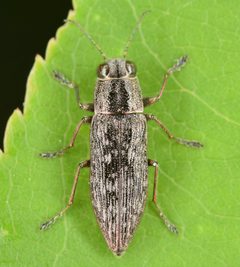
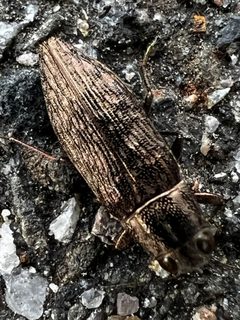
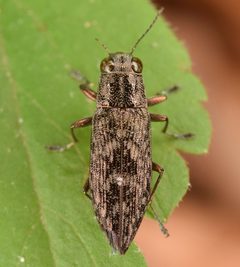
Pronunciation
How to pronounce Spectralia gracilipes: /spɛkˈtra.li.a ɡraˈkɪ.liˌpɛs/
These audio files are automatically generated. While they are not always 100% accurate, they are a good starting point.
Identification
Distinguished from similar dark buprestids by its small size and slender build. In the ID Challenge reference, it was initially mistaken for Dicerca by an experienced observer, suggesting superficial resemblance to that . Separation from Dicerca and other small dark buprestids likely requires examination of antennal structure, prosternal process, and elytral . The is smaller and more gracile than typical Dicerca.
Images
Appearance
A small, slender buprestid . The specific epithet 'gracilipes' (slender-footed) suggests elongated appendages. As a member of Buprestidae, it possesses the characteristic metallic coloration and elongate body form typical of jewel beetles. The single specimen depicted in reference material appears dark in coloration with a somewhat cylindrical body profile.
Distribution
North America; specifically recorded from northeastern United States (Vermont) and Canada (Ontario). The has been documented from Missouri in provisioning collections, suggesting broader distribution in eastern and central North America than the limited GBIF records indicate.
Seasonality
have been collected in early June in Missouri, suggesting late spring to early summer activity in at least part of its range.
Ecological Role
Documented as prey of the crabronid Cerceris fumipennis, which provisions its nests with paralyzed buprestid beetles. This -prey relationship has been used to survey for the .
Human Relevance
Of interest to entomologists studying buprestid diversity and - -prey relationships. The has been detected through surveys of Cerceris fumipennis colonies, demonstrating the utility of this wasp as a biosurveillance tool for buprestid fauna.
Similar Taxa
- DicercaSuperficially similar dark coloration and body form; distinguished by more robust build and different antennal structure
- Spectralia robustaCongeneric with similar ; S. robusta is larger and associated with Diospyros (persimmon) in Texas
More Details
Original Description
First described as Dicerca gracilipes by Melsheimer in 1845, later transferred to Spectralia
Detection Method
Documented through 'ground-picking' from Cerceris fumipennis provisioning sites, where deposit paralyzed beetles at nest entrances