
Spectralia
Casey, 1909
Species Guides
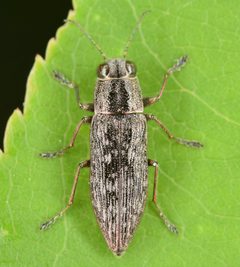
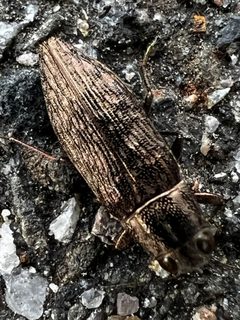
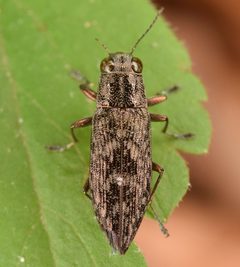
6Spectralia is a of jewel beetles ( Buprestidae) established by Casey in 1909. The genus contains approximately 22 described distributed primarily in North America. Species within this genus are associated with woody plants, particularly oaks (Quercus) and persimmons (Diospyros). Larvae develop in dead or dying branches, often in the transition zone between living and dead wood. are active during spring and early summer and have been documented visiting flowers.
Pronunciation
How to pronounce Spectralia: //spɛkˈtra.li.a//
These audio files are automatically generated. While they are not always 100% accurate, they are a good starting point.
Identification
Spectralia are small to medium-sized buprestids, generally slender in form. They can be distinguished from similar such as Dicerca by their more gracile body proportions and specific elytral sculpturing patterns. Spectralia gracilipes, one of the more commonly encountered species, is notably slender with long legs relative to body size. Accurate species identification typically requires examination of genitalia and detailed elytral punctation patterns.
Images
Habitat
in this are associated with woodland and forest-edge where their trees occur. They are specifically tied to woody environments containing oaks, persimmons, and related hardwoods. The larvae require dead or dying branches, often those with partial bark retention and intact sapwood.
Distribution
North America, with records from the United States including Texas, Missouri, Vermont, and Colorado. The appears to have its greatest diversity in the southern and central United States, particularly in oak-dominated regions of Texas and the Ozark Mountains.
Seasonality
activity has been documented from April through June, with peak varying by and latitude. Spectralia robusta has been specifically recorded in April in Texas.
Host Associations
- Quercus fusiformis - larval plateau live oak; larvae develop in dead branches
- Quercus havardii - larval shin oak
- Diospyros texana - larval Texas persimmon; larvae in half-live/half-dead branches
- Coreopsis - visitationflower visitation for feeding
- Opuntia engelmannii - visitationflower visitation observed for , may apply to Spectralia
Life Cycle
Larvae are wood-borers that develop in the sapwood of dead or dying branches. They create galleries in the transition zone between living and dead wood, often in branches that show partial dieback with retained bark. occurs within the wood, and emerge through round exit holes. The duration is not precisely documented but likely spans one to two years based on related buprestids.
Behavior
have been observed visiting flowers, particularly yellow composites. They are capable of and are likely given their flower-visiting . Larvae are sedentary wood-borers that feed internally within branches.
Ecological Role
As larvae, Spectralia contribute to wood decomposition by tunneling in dead and dying branches, facilitating nutrient cycling and creating for other organisms. Their specific association with partially dead branches suggests a role in early-stage wood breakdown before complete decay.
Human Relevance
Spectralia have no documented economic importance as pests. They are of interest to coleopterists and biodiversity researchers. The has been used in studies of buprestid diversity, including surveys utilizing the crabronid Cerceris fumipennis, which provisions its nests with buprestid prey including Spectralia.
Similar Taxa
- DicercaSimilar size and general buprestid form; distinguished by more robust body, different elytral punctation, and often more pronounced pronotal margins
- AgrilusBoth are slender buprestids; Agrilus typically has more pronounced elytral or different abdominal sternite structure
- ChrysobothrisSimilar larval habits in wood; Chrysobothris generally have broader, more flattened bodies and different antennal structure
More Details
Taxonomic History
The was established by Casey in 1909. were previously placed in other genera, leading to some confusion in older literature. The type species and precise generic boundaries have been subject to revision.
Collection Methods
can be collected by beating dead oak and persimmon branches, sweeping flowers, or rearing from infested wood collected in the field. They are also taken by the Cerceris fumipennis, which hunts buprestids to provision its nests.
Conservation Status
No in this are currently listed as threatened or endangered. However, loss and decline of oak woodlands could impact local .