
Phaenops lecontei
(Obenberger, 1928)
Phaenops lecontei is a of metallic wood-boring beetle in the Buprestidae. The Phaenops comprises species associated with coniferous trees, particularly pines. P. lecontei occurs in North America, with records from British Columbia, Canada and Alaska, United States. Like other members of its genus, it is presumed to develop in wood of Pinus species, though specific associations for this species remain poorly documented.
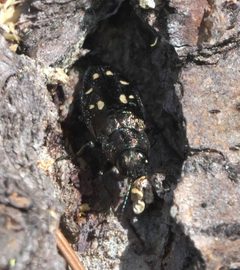
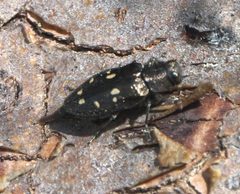
Pronunciation
How to pronounce Phaenops lecontei: /ˈfiːnɔps lɛˈkɔnteɪ/
These audio files are automatically generated. While they are not always 100% accurate, they are a good starting point.
Images
Habitat
Coniferous forest , specifically associated with pine woodlands. Based on -level , likely inhabits dead or dying pine branches and trunks.
Distribution
North America: recorded from British Columbia, Canada and Alaska, United States. The full extent of its range within North America is not well established.
Host Associations
- Pinus - larval presumed based on ; specific records for this not confirmed
Ecological Role
Wood-boring contributing to decomposition of coniferous wood. Larval tunneling in dead or dying pine wood facilitates nutrient cycling and creates for other organisms.
Similar Taxa
- Phaenops drummondicongeneric with similar and ; distinguished by distribution and subtle morphological differences
- Phaenops gentiliscongeneric with metallic green coloration and pine-associated ; P. gentilis occurs in western North America and shows bright metallic green coloration
- Phaenops pinieduliscongeneric distinguished by large yellow maculations covering more than 50% of elytral surface
More Details
Taxonomic note
The specific epithet 'lecontei' honors the American entomologist John Lawrence LeConte (1825-1883), a prolific describer of North American beetles. The was described by Obenberger in 1928.
Research needs
Basic biological information including larval specificity, complete distribution, and seasonal activity patterns remain undocumented for this . Most information is inferred from better-studied .
Sources and further reading
- BugGuide
- Wikipedia
- GBIF taxonomy match
- iNaturalist taxon
- Catalogue of Life
- Bug Eric: Beetle Bonanza
- First internet image of Phaenops piniedulis | Beetles In The Bush
- Cicindela scutellaris lecontei x scutellaris unicolor intergrades in southeast Missouri | Beetles In The Bush
- Some recent publications | Beetles In The Bush