
Phaenops drummondi
(Kirby, 1837)
flatheaded fir borer, Drummond's Flathead Fir Borer
Phaenops drummondi is a metallic wood-boring beetle in the Buprestidae, commonly known as the flatheaded fir borer. The was originally described as Buprestis drummondi by Kirby in 1837 and later transferred to the Phaenops. A nomenclatural revision in 2012 formally synonymized Melanophila drummondi ab. nicolayi under this species. It is distributed across North America, with confirmed records from Canada including Alberta, British Columbia, Labrador, and Manitoba.
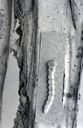
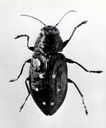
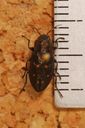
Pronunciation
How to pronounce Phaenops drummondi: //ˈfiːnɒps drʌˈmɒndaɪ//
These audio files are automatically generated. While they are not always 100% accurate, they are a good starting point.
Identification
The can be distinguished from related North American Phaenops species by morphological characters not specified in available sources. The Phaenops is distinguished from the related fire genus Melanophila by the absence of large heat-sensing pores on the . Phaenops piniedulis, a related species, is distinguished by large yellow maculations covering more than 50% of the elytral surface, but comparative diagnostic features for P. drummondi are not documented.
Images
Appearance
are metallic wood-boring beetles with the characteristic flattened body form typical of Buprestidae. The specific coloration and maculation patterns are not detailed in available sources, though the Phaenops generally exhibits metallic coloration. Related in the genus, such as Phaenops piniedulis, display large yellow maculations covering more than 50% of the elytral surface, but whether P. drummondi shares this trait is not confirmed.
Habitat
Associated with coniferous forests, specifically with fir trees based on the . Larval development occurs in wood of trees. The is found in forested regions of North America where its host conifers occur.
Distribution
North America. Confirmed records from Canada: Alberta, British Columbia, Labrador, Manitoba. The 2012 nomenclatural revision by MacRae and Westcott included a new distribution record, though the specific location was not detailed in the abstract.
Diet
Larvae are wood-borers, feeding internally on the wood of coniferous trees. likely feed on foliage or bark surfaces, though this is not explicitly documented.
Host Associations
- Abies spp. - larval Inferred from 'flatheaded fir borer'; specific records not detailed in available sources
Life Cycle
Complete with larval stage developing as a wood-borer in coniferous trees. Larvae create galleries in wood, with presumably occurring within the host. emerge to disperse and reproduce.
Behavior
are active during daylight hours and are quick to fly when disturbed, a common trait in Buprestidae. They may be encountered on trees or captured using beating techniques.
Ecological Role
As a wood-boring , larvae contribute to nutrient cycling in forest by breaking down dead and dying coniferous wood. The may also serve as prey for and other insect .
Human Relevance
May be of interest to forest entomologists and those studying coniferous forest health. The is not documented as a significant economic pest in available sources. Specimens are collected by entomologists for scientific study.
Similar Taxa
- Phaenops piniedulisCongeneric with similar and ; distinguished by large yellow maculations covering more than 50% of elytral surface in P. piniedulis
- Melanophila spp.Related of 'fire beetles' with similar body form; distinguished by presence of large heat-sensing pores on in Melanophila, which are absent in Phaenops
More Details
Nomenclatural History
The has undergone significant taxonomic revision. Originally described as Buprestis drummondi by Kirby in 1837, it was later transferred to Phaenops. The 2012 paper by MacRae and Westcott addressed the status of Melanophila drummondi ab. nicolayi Obenberger, 1944, determining it to be a synonym of P. drummondi with corrected authorship. This resolved conflicting interpretations under the International Code of Zoological regarding the availability of infrasubspecific names.
Subspecies
Two have been recognized: Phaenops drummondi drummondi (Kirby, 1837) and Phaenops drummondi nicolayi (Obenberger, 1944), though the latter was synonymized in the 2012 revision.
Sources and further reading
- BugGuide
- Wikipedia
- GBIF taxonomy match
- iNaturalist taxon
- NCBI Taxonomy
- Catalogue of Life
- Some recent publications | Beetles In The Bush
- taxonomy | Beetles In The Bush | Page 8
- My Publications | Beetles In The Bush
- First internet image of Phaenops piniedulis | Beetles In The Bush
- Bug Eric: Beetle Bonanza
- Nomenclatural history of Melanophila drummondi ab. nicolayi Obenberger, 1944 (Coleoptera: Buprestidae), a change of authorship and synonymy under Phaenops drummondi (Kirby 1837), and a new distribution record and summary of larval hosts for the species