
Melanophila consputa
LeConte, 1857
Charcoal Beetle
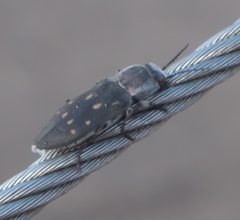
Melanophila consputa, commonly known as the charcoal , is a metallic wood-boring beetle in the Buprestidae. The is notable for its attraction to forest fires and smoke, using specialized infrared-sensing organs on its to detect heat from smoldering or burning wood. Females lay in fire-damaged coniferous trees, where larvae feed on phloem tissue. The species has been documented swarming in response to smoke from sources other than wildfires, including cigarette smoke and industrial emissions.
Pronunciation
How to pronounce Melanophila consputa: /ˌmɛləˈnɒfɪlə kənˈspjuːtə/
These audio files are automatically generated. While they are not always 100% accurate, they are a good starting point.
Identification
M. consputa is one of at least two North American in the Melanophila, alongside M. acuminata. Specific morphological distinguishing features from are not detailed in available sources. The genus Melanophila is distinguished from related genera such as Phaenops by the presence of large heat-sensing pores (sensory pits) on the , which enable fire-seeking .
Images
Habitat
Associated with coniferous forests, particularly areas affected by fire. Breeds in fire-scarred or recently burned coniferous trees.
Distribution
Documented from Central America, North America, and Oceania. Specific countries or regions within these areas are not detailed in available sources.
Seasonality
have been observed flying in late summer and fall, particularly during hot, dry conditions. Activity peaks during fire season.
Diet
Larvae feed on phloem tissue of fire-damaged coniferous trees. feeding habits are not documented.
Host Associations
- Coniferous trees (fire-damaged) - larval Females lay in charred remains of conifers; larvae feed on phloem
Life Cycle
Females oviposit in fire-damaged coniferous wood. Larvae develop within the phloem of burned trees. Detailed descriptions of , larval instars, , or longevity are not available.
Behavior
Exhibits strong attraction to heat and smoke from forest fires, detected via specialized infrared-sensing organs on the . Will fly distances exceeding 50 miles to reach fire sources. Has been observed swarming in large numbers around artificial smoke sources including cigarette smoke, industrial emissions, and burning refuse. may bite humans when swarming, and have been documented crawling into protective clothing of firefighters.
Ecological Role
Contributes to decomposition of fire-killed coniferous trees through larval feeding on phloem. Serves as a food resource for insectivorous birds, including the Black-backed Woodpecker (Picoides arcticus), which specializes in recently burned forest .
Human Relevance
Considered a nuisance to wildland firefighters due to swarming and biting. Historical records document swarming at human gatherings producing smoke, including football games with large numbers of cigarette smokers. Bites to humans have been reported, though medical significance is not documented.
Similar Taxa
- Melanophila acuminata with similar fire-seeking ; both documented swarming at smoke sources
- Phaenops piniedulisRelated buprestid with similar appearance and association with pines, but lacks heat-sensing organs and fire-seeking
More Details
Infrared Detection
M. consputa possesses specialized sensory pits on the that detect infrared radiation from fires. This sensory is shared with other Melanophila but absent in related .
Historical Swarming Records
E. Gorton Linsley documented extensive swarming of M. consputa and M. acuminata at UC Berkeley football games in 1943, attributed to cigarette smoke. Similar complaints have been received from sawmill operators, firefighters, and smelter .
Sources and further reading
- BugGuide
- Wikipedia
- GBIF taxonomy match
- iNaturalist taxon
- NCBI Taxonomy
- Catalogue of Life
- Meet the 'Extreme Insects' Aug. 19 at Bohart Museum of Entomology Open House | Bug Squad
- These Insects Thrive in the Extreme! | Bug Squad
- UC Davis Seminars: Two USDA Forest Entomologists to Zero in on Bark Beetles | Bug Squad
- A rare opportunity to do fall insect collecting in western North America | Beetles In The Bush
- First internet image of Phaenops piniedulis | Beetles In The Bush
- When Forest Fires Flare, Woodboring Beetles Rush In