Brachys tessellatus
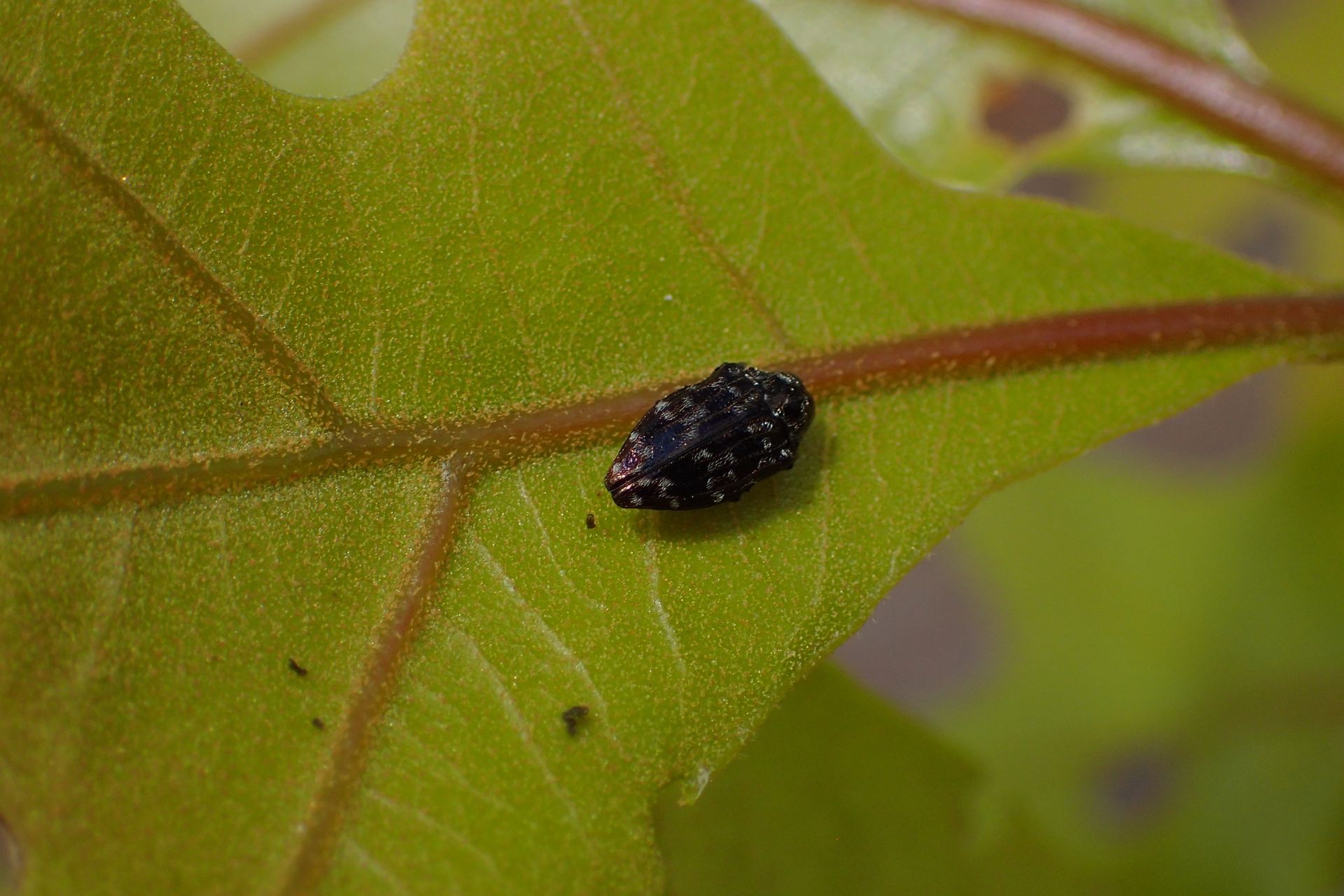
Brachys tessellatus is a small, flat-bodied jewel beetle in the tribe Trachyini, measuring approximately 3–5 mm in length. Unlike most buprestids, which bore into wood as larvae, this is a leafminer that develops within the leaves of its plant. Its distribution on turkey oak (Quercus laevis) is strongly influenced by variation in host tree budbreak , with occurrence patterns tracking the timing of leaf . The species exhibits the derived, compact, wedge-shaped characteristic of leaf-mining buprestids.
Pronunciation
How to pronounce Brachys tessellatus: /ˈbrækɪs ˌtɛsəˈlətəs/
These audio files are automatically generated. While they are not always 100% accurate, they are a good starting point.
Images
Habitat
Turkey oak (Quercus laevis) forests; specifically associated with trees exhibiting particular budbreak phenologies. The 's distribution within these forests is determined by spatial variation in the timing of leaf .
Distribution
Southeastern United States, associated with turkey oak (Quercus laevis) . Distribution patterns within this range are affected by variation in tree budbreak , with beetles more abundant on trees with particular leaf timings.
Seasonality
Activity and distribution tied to ; occurrence patterns correlate with turkey oak budbreak timing, suggesting spring activity coinciding with leaf .
Diet
Leaf tissue of turkey oak (Quercus laevis); larvae are leafminers that feed internally within oak leaves.
Host Associations
- Quercus laevis - obligateturkey oak; for larval leafmining development. Distribution of on this host is influenced by variation in budbreak .
Behavior
Leafmining ; larvae develop within turkey oak leaves rather than boring into wood. distribution is influenced by tree budbreak , suggesting behavioral or physiological sensitivity to leaf timing.
Ecological Role
Herbivore; leafminer on turkey oak. Contributes to oak leaf damage and may influence leaf physiology through mining activity.
Sources and further reading
- BugGuide
- List of Species Fact Sheets| Grasshoppers of Wyoming and the West
- Grasshoppers of Colorado
- Plantae | Beetles In The Bush | Page 4
- Brachys on oak | Beetles In The Bush
- Adelgidae | Beetles In The Bush
- Variation in budbreak phenology affects the distribution of a leafmining beetle (Brachys tessellatus) on turkey oak (Quercus laevis)