
Nicobiini
Genus Guides
3- Anobiopsis
- Nicobium(deathwatch beetles)
- Trichodesma(Barbbells)
Nicobiini is a tribe of beetles within the Ptinidae, the spider beetles and deathwatch beetles. Members of this tribe are small beetles associated with stored products, wood-boring habits, or dry organic materials. The tribe is distinguished from related groups within Ptinidae by specific morphological features of the and pronotum. Nicobiini includes several of economic significance due to their tendency to infest stored goods and wooden structures.

Pronunciation
How to pronounce Nicobiini: /ˌnikoʊˈbiːaɪnaɪ/
These audio files are automatically generated. While they are not always 100% accurate, they are a good starting point.
Identification
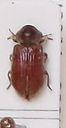
Nicobiini can be distinguished from other Ptinidae tribes by the structure of the antennal club, which is typically compact with three distinct segments. The pronotum is often constricted at the base and expanded anteriorly, giving a somewhat bell-shaped or hooded appearance. The body is generally small (2-5 mm), cylindrical to slightly oval, with a smooth or finely punctured . Unlike some related tribes, the are usually not deeply (notched) anteriorly.
Images
Habitat
in Nicobiini are found in association with dry organic materials, including stored food products, dried plant matter, dead wood, and occasionally fungal substrates. Many occupy human-made environments such as warehouses, mills, and domestic settings where stored products are present. Some species are associated with dead branches or decaying wood in natural forest .
Distribution
The tribe has a distribution, with recorded across North America, Europe, Asia, Africa, and Australia. Individual species distributions vary, with some being widespread pests and others having more restricted native ranges.
Seasonality
Activity patterns vary by and . species associated with heated buildings may be active year-round. Species in natural habitats are most commonly observed during warmer months, with peak activity in late spring through summer in temperate regions.
Diet
Larvae and feed on dry organic matter including stored grain products, dried fruits, nuts, spices, dead insects, animal remains, wood, and fungal mycelia. Some are known to digest cellulose with the assistance of gut .
Life Cycle
Development includes , larva, pupa, and stages. Larvae are typically C-shaped, white to cream-colored, and feed within the substrate. The larval period may last several weeks to months depending on temperature and food quality. occurs within the food material or in prepared . time ranges from one month to over a year for some .
Behavior
are generally and cryptic, hiding in cracks and crevices during daylight hours. Many can produce stridulatory sounds by rubbing body parts together, a trait common in Ptinidae. When disturbed, adults often feign death (). Some species are capable of , while others are brachypterous or flightless.
Ecological Role
In natural , Nicobiini contribute to decomposition of dead plant material and recycling of nutrients. In human environments, they function as pests of stored products and structural wood. Their feeding activities can facilitate fungal of wood substrates.
Human Relevance
Several within Nicobiini contain significant stored product pests, including that infest grain, dried fruits, spices, and museum specimens. Some species damage wooden structures, though they are generally less destructive than anobiine beetles. Management in storage facilities relies on , temperature control, and when necessary.
Similar Taxa
- XyletininiAlso within Ptinidae, but distinguished by more elongate body form and different antennal club structure with less distinct segmentation
- PtininiRelated tribe with more globular body shape and often more strongly ; antennal club segments are less distinctly separated
- AnobiiniFormerly included in Anobiidae (now Ptinidae), recognized by the characteristic pronotal shape with lateral carinae and different antennal insertion
More Details
Taxonomic History
Nicobiini has undergone taxonomic revision with the reclassification of Anobiidae into Ptinidae. The tribe was historically placed within Anobiidae sensu lato, but molecular and morphological studies supported its placement in the expanded concept of Ptinidae. The tribal classification within Ptinidae remains under study, with some authorities recognizing different circumscriptions.