
Trogoxylon
LeConte, 1862
Species Guides
3- Trogoxylon aequale
- Trogoxylon parallelipipedum(Velvety Powderpost Beetle)
- Trogoxylon punctatum
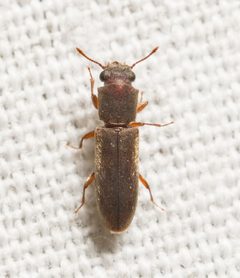
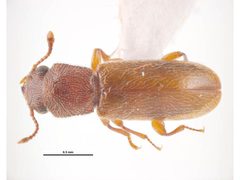
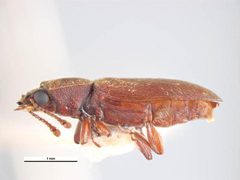
Trogoxylon is a of powderpost beetles in the Bostrichidae, Lyctinae. These wood-boring beetles are characterized by their association with dry, seasoned wood. The genus includes approximately 15 described distributed across multiple regions. Trogoxylon impressum has been documented as a pest of fig plants in Turkey, where it causes damage through larval tunneling.
Pronunciation
How to pronounce Trogoxylon: /troʊˈɡɑksɪlɒn/
These audio files are automatically generated. While they are not always 100% accurate, they are a good starting point.
Identification
As members of Lyctinae, Trogoxylon possess a pronotum with a hood-like shape that partially covers the from above. They have cylindrical bodies typical of powderpost beetles. Species-level identification requires examination of antennal club structure, pronotal shape, and elytral punctation patterns.
Images
Habitat
Dry, seasoned wood including hardwoods and softwoods. Trogoxylon impressum has been observed in fig plants (Ficus carica) in agricultural settings.
Distribution
Records from Europe (including Sweden), Turkey, and other regions with established . GBIF distribution records indicate presence in Norway (NO) and Sweden (SE).
Diet
Larvae feed on starch-containing wood, tunneling through sapwood and heartwood of seasoned timber. Trogoxylon impressum has been observed feeding on fig plants.
Host Associations
- Ficus carica - plantTrogoxylon impressum documented causing damage to fig plants in Turkey
Life Cycle
Complete with , larval, pupal, and stages. Larvae are the primary wood-boring and feeding stage, creating tunnels filled with fine powdery . occurs within the wood.
Behavior
are capable of and are attracted to light. Larvae bore into wood and can reduce structural timber to powder.
Ecological Role
Decomposers of dead and seasoned wood. Serve as for including Monolexis fuscicornis (Braconidae: Doryctinae), which has been documented as a larva-pupa parasitoid of Trogoxylon impressum in Turkey.
Human Relevance
Some are pests of stored wood products and structural timber. Trogoxylon impressum has been identified as an emerging pest of fig plantations with potential for significant agricultural damage. The Monolexis fuscicornis shows promise for biocontrol of this pest.
Similar Taxa
- LyctusAlso in Lyctinae; distinguished by differences in antennal club segmentation and pronotal structure
- MintheaSmall lyctine beetles with overlapping size range; Trogoxylon typically larger with distinct pronotal hood
- Bostrichidae (other subfamilies)Non-lyctine bostrichids lack the characteristic hood-like pronotum and have different orientation
More Details
Parasitoid relationships
The braconid Monolexis fuscicornis was first documented as a larva-pupa of Trogoxylon impressum in Turkey, representing a significant finding for potential of this wood-boring pest in fig plantations.
Agricultural significance
Damage to fig plants by Trogoxylon impressum, including exit holes from emerging , was first observed and documented in the Southeast Anatolia region of Turkey, indicating expanding pest range or previously unrecognized associations.