Prostephanus
Lesne, 1898
Species Guides
4- Prostephanus apax(horned powder-post beetle)
- Prostephanus arizonicus(horned powder-post beetle)
- Prostephanus punctatus(horned powder-post beetle)
- Prostephanus truncatus(Larger Grain Borer)
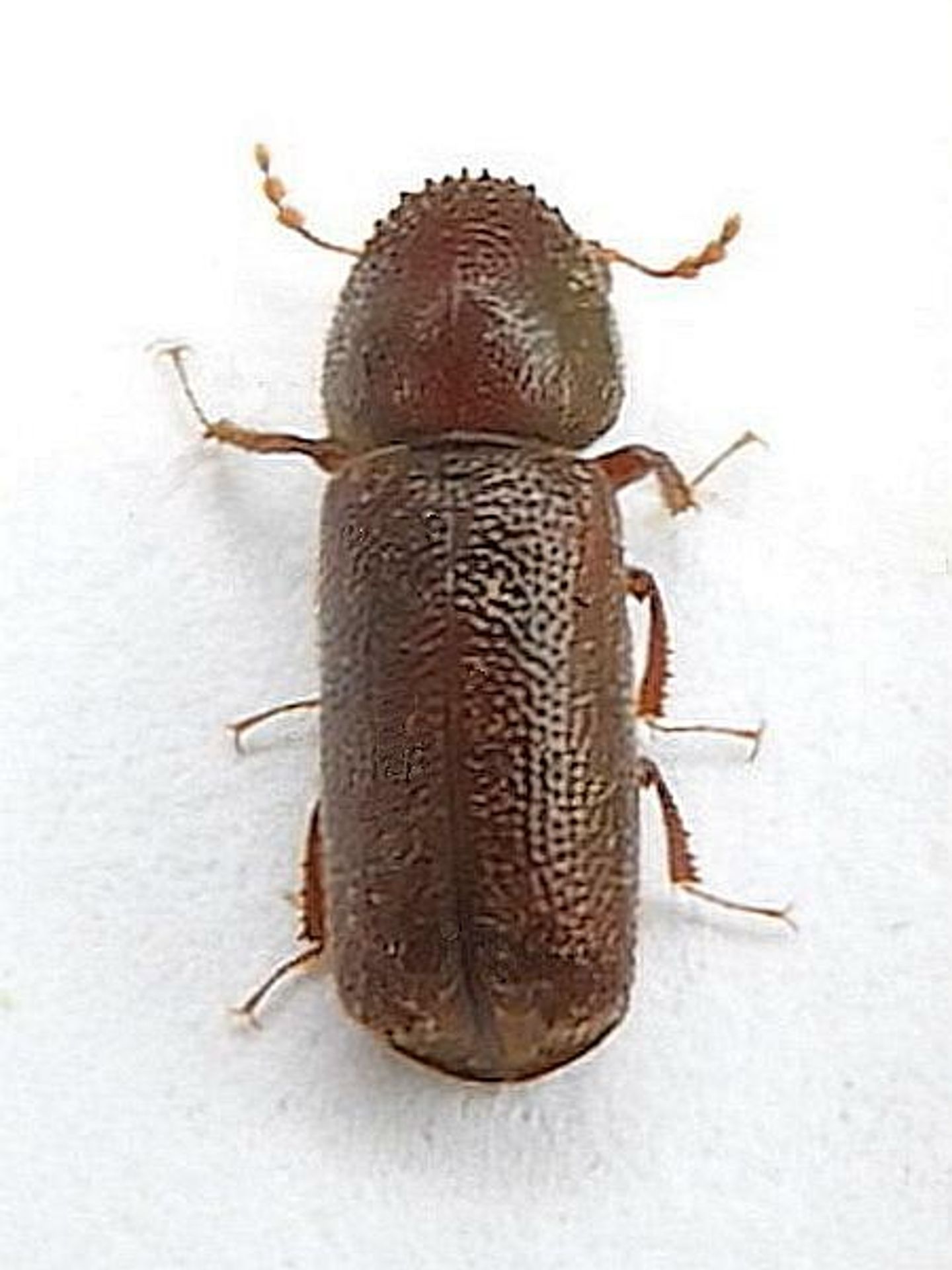
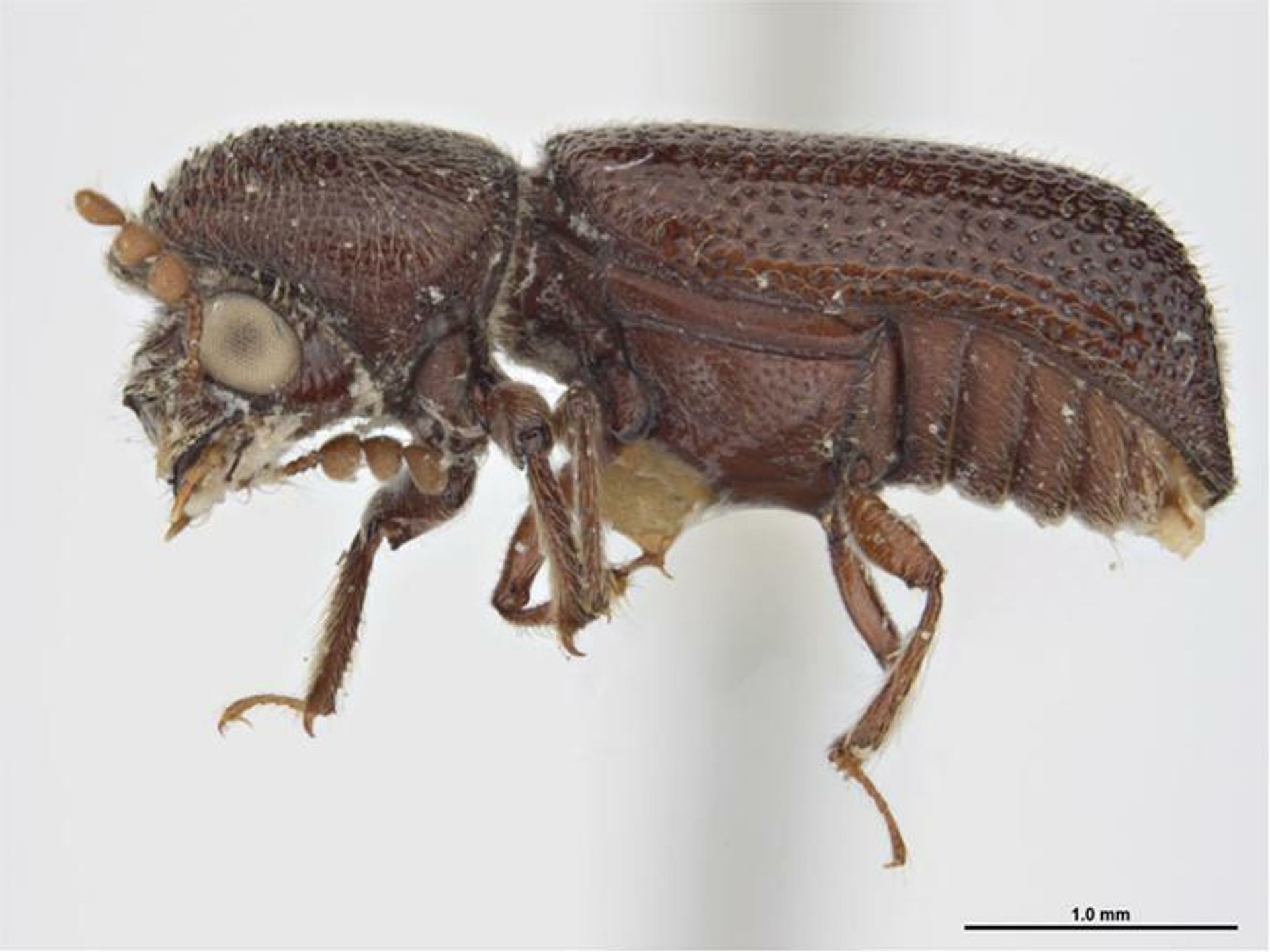
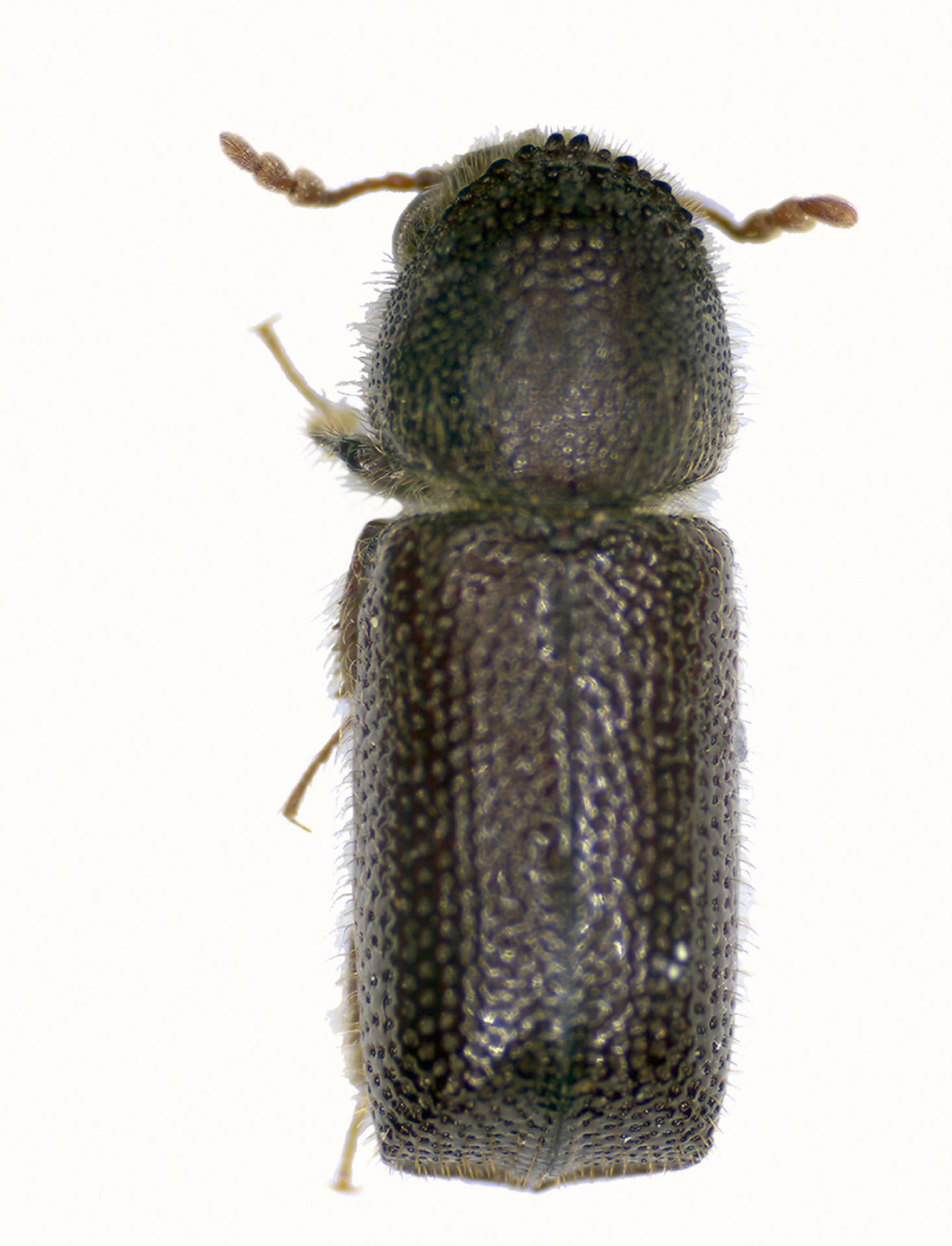
Prostephanus is a of horned powder-post beetles in the Bostrichidae, containing approximately five described . The genus is best known for , commonly called the , which is a highly destructive pest of stored maize and cassava. Species in this genus are wood-boring beetles that have adapted to exploit stored products, with P. truncatus being accidentally introduced to Africa in the late 1970s where it became a major agricultural pest. The genus is native to the Americas, particularly Mexico and Central America.
Pronunciation
How to pronounce Prostephanus: //prɔˈstɛfənəs//
These audio files are automatically generated. While they are not always 100% accurate, they are a good starting point.
Identification
Members of Prostephanus can be distinguished from other bostrichid by the presence of horn-like projections on the pronotum, characteristic of horned powder-post beetles. The genus contains five described : P. apax, P. arizonicus, P. punctatus, P. sulcicollis, and P. truncatus. Specific identification to species level requires examination of subtle morphological differences in pronotal armature and elytral sculpturing.
Images
Habitat
in this inhabit forests and woodlands in their native range, where they function as wood-boring insects. has adapted to stored product environments including grain storage facilities, where persist and can readily reinfest after control measures. The beetles also maintain populations in surrounding non-agricultural including forests, allowing movement between natural and anthropogenic environments.
Distribution
The Prostephanus is native to the Americas, with its center of diversity in Mexico and Central America. has been accidentally introduced to sub-Saharan Africa, where it was first recorded in Tanzania in the late 1970s and subsequently spread throughout the region. The has also been recorded in Togo and other African countries. Climate modeling indicates potential for further range expansion into the southern United States, South America, and parts of Asia under warming conditions.
Behavior
of are capable of and exhibit wind-dependent flight and landing . Females caught in traps and flying off maize cobs are mated, suggesting that females can act as independent colonizers. The maintains in both stored product facilities and surrounding forest , allowing movement between these environments.
Human Relevance
is a major pest of global agricultural significance. In stored maize, can destroy approximately 40 percent of grain in a three-month storage period. In Africa, where it has adapted to cassava, losses of stored cassava roots are estimated at 52-74 percent. The poses a significant biosecurity threat, with climate models predicting potential expansion into major corn and cassava producing regions including the United States Corn Belt, Asia, Europe, and Oceania. Research has investigated alternative control methods including camara and combinations of natural with .
More Details
Species List
The contains five described : Prostephanus apax Lesne, 1930; Prostephanus arizonicus Fisher, 1950; Prostephanus punctatus (Say, 1826); Prostephanus sulcicollis (Fairmaire & Germain, 1861); and (Horn, 1878).
Climate Change Vulnerability
distribution modeling indicates that will likely find suitable conditions further inland and outside the tropics by 2050 and 2070 under both low (RCP 2.6) and high (RCP 8.5) climate change scenarios. The greatest range expansion is expected by 2050, with monitoring efforts recommended for coastal areas, shipping ports, and the United States Corn Belt region.
Research History
The has been extensively studied due to its economic impact. Notable research includes Christian Nansen's doctoral dissertation on the spatial distribution and potential of P. truncatus in Benin, West Africa, which examined trapping, vegetation analysis, and satellite image interpretation. Physiological studies have established age-grading criteria based on yellow body formation in female ovaries.
Sources and further reading
- BugGuide
- Wikipedia
- GBIF taxonomy match
- iNaturalist taxon
- NCBI Taxonomy
- Catalogue of Life
- Christian Nansen: An Entomologist on the Move | Bug Squad
- The Silence of the Cicadas | Bug Squad
- larger grain borer (Prostephanus truncatus) in cracked corn - Entomology Today
- Prostephanus truncatus Archives - Entomology Today
- Larger Grain Borer: A Pesky Pest That Gets Peskier With Climate Change
- larger grain borer range maps under climate change - Entomology Today
- Prostephanus truncatus . [Distribution map].
- Prostephanus truncatus . [Distribution map].
- Physiological age‐grading and ovarian physiology of Prostephanus truncatus
- Modeling the potential range expansion of larger grain borer, Prostephanus truncatus (Coleoptera: Bostrichidae)
- Flight and landing behaviour of Prostephanus truncatus (Horn) (Coleoptera: Bostrichidae) in relation to wind speed
- Effectiveness of Tick Berry (Lantana camara) in Controlling Larger Grain Borer (Prostephanus truncatus) in Stored Maize
- Life history of Prostephanus truncatus (Horn) (Coleoptera: Bostrichidae) at optimum conditions of temperature and humidity
- Combining Natural and Microbial Insecticides with Diatomaceous Earth for Effective Management of Prostephanus truncatus.