
Hydrocanthus
Say, 1823
Species Guides
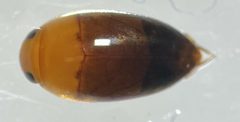
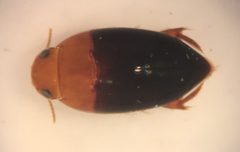
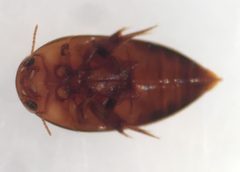
4Hydrocanthus is a of small predaceous diving beetles in the Noteridae. Members are primarily neotropical in distribution, with some extending into the Nearctic region. The genus was revised in 2016 when Baca et al. transferred approximately half of the species to the revived and elevated genus Sternocanthus. Hydrocanthus species are associated with aquatic and semi-aquatic .
Pronunciation
How to pronounce Hydrocanthus: /haɪˌdroʊˈkænθəs/
These audio files are automatically generated. While they are not always 100% accurate, they are a good starting point.
Identification
Hydrocanthus can be distinguished from the related Sternocanthus (formerly treated as a subgenus) by subtle morphological differences in the pronotum and elytral structure. The genus is characterized by small body size, compact form, and the typical noterid body plan with reduced hind wings and adaptations for burrowing in muddy substrates. -level identification requires examination of male genitalia and detailed microsculpture patterns.
Images
Habitat
Aquatic and semi-aquatic environments including wetlands, marshes, ponds, and slow-moving waters. are typically found in muddy or silty substrates rather than open water.
Distribution
Primarily Neotropical, with distribution concentrated in South America, Central America, and the Caribbean. Records include Colombia (Amazonas, Antioquia, Arauca, Atlántico, Bolívar, Boyacá, Caldas, Casanare, Cauca, Chocó, La Guajira, Guaviare, Sucre, Valle del Cauca, Vaupés), with some extending into the southern United States.
Behavior
Burrowing in muddy substrates has been observed; are not strong swimmers compared to other diving beetles and tend to remain near the bottom or within sediment.
Similar Taxa
- SternocanthusFormerly treated as a subgenus of Hydrocanthus but elevated to rank in 2016; previously marked with ‡ in Hydrocanthus listings now belong to Sternocanthus. The two genera share similar preferences but differ in pronotal and elytral .
- NoterusAnother in Noteridae with similar small size and burrowing habits; Hydrocanthus is distinguished by specific structural features of the pronotum and prosternal process.
More Details
Taxonomic Revision
In 2016, Baca et al. published a phylogenetic revision that split Hydrocanthus, reviving Sternocanthus Guignot, 1948 from subgeneric status and elevating it to rank. This transferred numerous previously listed under Hydrocanthus to Sternocanthus. The current circumscription of Hydrocanthus is therefore substantially narrower than historical treatments.