
Peltodytes oppositus
Roberts, 1913
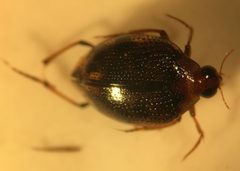
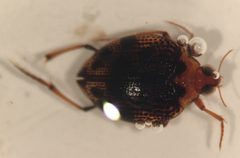
Peltodytes oppositus is a of crawling water beetle in the Haliplidae, first described by Roberts in 1913. The Peltodytes contains approximately 20 species distributed across North America. Members of this genus are aquatic beetles associated with freshwater . The specific epithet "oppositus" distinguishes this species from , though detailed biological studies remain limited.
Pronunciation
How to pronounce Peltodytes oppositus: //ˌpɛl.təˈdaɪ.tiːz ˌɒp.əˈsɪt.əs//
These audio files are automatically generated. While they are not always 100% accurate, they are a good starting point.
Identification
Accurate identification of Peltodytes oppositus to level requires examination by a familiar with the . The Haliplidae (crawling water beetles) can be recognized by their aquatic habits, oval convex bodies, and fringed hind legs. Within Peltodytes, species separation relies on subtle characters of the male genitalia, punctation patterns, and body proportions that are not reliably distinguishable from images alone.
Images
Habitat
Aquatic freshwater environments including ponds, lakes, and slow-moving streams. Members of Haliplidae typically inhabit vegetation-rich margins of water bodies where they can cling to submerged plants.
Distribution
North America. The precise range within North America is not well documented in available sources, though the Peltodytes is broadly distributed across the continent.
Ecological Role
As aquatic beetles, members of Haliplidae contribute to freshwater as both and prey. Their specific ecological functions within aquatic have not been separately studied for this .
Similar Taxa
- Other Peltodytes species share aquatic habits, oval body shape, and swimming-adapted hind legs. Distinguishing P. oppositus requires examination of fine morphological characters.
- Other Haliplidae genera (e.g., Haliplus, Brychius) members share aquatic lifestyle and general body form. Separation relies on details of pronotal shape, elytral punctation, and leg structure.
More Details
Taxonomic Note
The authority for this is Roberts, 1913. The Peltodytes was established by Roberts and is to North America, containing approximately 20 species.
Data Limitations
Available sources provide minimal -specific information for P. oppositus. Most knowledge of the comes from broader -level studies of Haliplidae.