
Dineutus sublineatus
(Chevrolat, 1834)
whirligig beetle
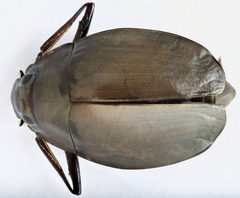
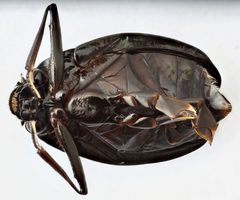
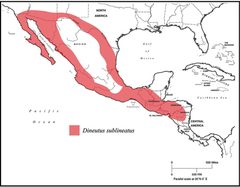
Dineutus sublineatus is a of whirligig beetle in the Gyrinidae, found in Central America and the Southwestern United States. Like other members of its , it possesses two separate pairs of —one pair viewing above and one below the water surface—an for simultaneous aerial and underwater vision. Neuroanatomical studies have shown this species exhibits a unique sensory modality switch: its mushroom body calyces, brain structures typically associated with olfactory processing in insects, receive exclusive visual input from the rather than olfactory input.
Pronunciation
How to pronounce Dineutus sublineatus: //dɪˈnjuːtəs ˌsʌblɪˈneɪtəs//
These audio files are automatically generated. While they are not always 100% accurate, they are a good starting point.
Identification
Members of the Dineutus can be distinguished from the other North American whirligig beetle genus Gyrinus by their larger size (typically 10–12 mm or more in length) and hidden scutellum. Within Dineutus, identification often requires examination of coloration, particularly leg color, and male genitalia. Dineutus sublineatus is found in Central America and the Southwestern United States, which may help distinguish it from other Dineutus species with more restricted or different geographic ranges.
Images
Habitat
Aquatic; inhabits the surface of freshwater bodies. Found in rivers and streams with clear, flowing water.
Distribution
Central America and the Southwestern United States.
Behavior
Exhibits the characteristic erratic, zigzagging surface swimming typical of whirligig beetles. Forms or 'rafts' on the water surface, which may function in detection through increased vigilance and possibly as aposematic signals warning of noxious chemical defenses.
Similar Taxa
- Dineutus discolorSimilar large size and rounded elytral apices; distinguished by geographic distribution and subtle morphological differences in male genitalia and protarsus structure.
- Dineutus ciliatusSimilar size and general appearance; distinguished by leg coloration (dark legs in D. ciliatus versus orange legs in related ) and coloration patterns.
- Gyrinus spp.The other of whirligig beetles in North America; distinguished by smaller size, visible scutellum, and more streamlined body shape.
More Details
Neuroanatomical significance
Dineutus sublineatus is notable for possessing robust mushroom body calyces despite lacking antennal lobes, unlike most aquatic insects. Neuroanatomical research has demonstrated that its calyces receive exclusive visual input from the , representing a complete sensory modality switch from the typical olfactory function of these brain structures in terrestrial insects. This is linked to its divided system adapted for simultaneous vision above and below the water surface.
Sources and further reading
- BugGuide
- Wikipedia
- GBIF taxonomy match
- iNaturalist taxon
- NCBI Taxonomy
- Gyrinidae | Beetles In The Bush
- New Whirligig Beetle Showcases U.S. Biodiversity Hotspot
- June | 2010 | Beetles In The Bush | Page 2
- Ozark Trail | Beetles In The Bush
- Visual inputs to the mushroom body calyces of the whirligig beetle Dineutus sublineatus: Modality switching in an insect
- Visual inputs to the mushroom body calyces of the whirligig beetle Dineutus sublineatus: Modality switching in an insect