
Dineutus productus
Roberts, 1895
whirligig beetle
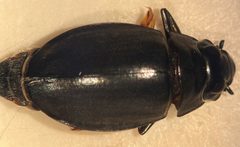
Dineutus productus is a of whirligig beetle in the Gyrinidae. First described in 1895, it was historically known from Oklahoma and Texas, with a 2014 discovery marking the first record for Kansas. Unlike most Dineutus species that inhabit flowing water, this species has been found in small, shallow, stagnant pools with muddy bottoms and abundant emergent vegetation. It belongs to a characterized by large size (~10–12 mm), rounded elytral apices, and a hidden scutellum.
Pronunciation
How to pronounce Dineutus productus: //dɪˈnjuːtəs proʊˈdʌktəs//
These audio files are automatically generated. While they are not always 100% accurate, they are a good starting point.
Identification
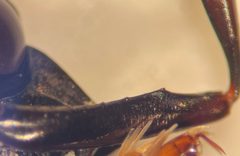
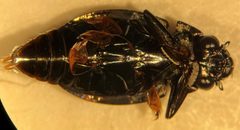
Dineutus productus belongs to the Dineutus, distinguished from the smaller genus Gyrinus by its larger size (typically 10–12 mm), rounded elytral apices, and hidden scutellum. Within Dineutus, identification relies heavily on coloration, particularly leg color. Specific diagnostic features for D. productus are not well documented in available sources, though the species is known from its distinctive preference for stagnant rather than flowing water.
Images
Habitat
Small, shallow, stagnant pools with muddy bottoms and abundant emergent vegetation; associated with leaf litter and woody debris. This preference differs markedly from typical Dineutus , which usually inhabit flowing water.
Distribution
North America: historically recorded from Oklahoma and Texas; first documented in Kansas in 2014. The Kansas specimens were collected in the eastern part of the state.
Seasonality
Late June (based on collection records from Kansas).
Similar Taxa
- Dineutus discolorCommon, widespread in the same region; D. productus distinguished by preference for stagnant pools versus flowing water, and potentially by coloration
- Dineutus ciliatusShares large size and rounded elytral apices; distinguished primarily by coloration including dark legs
- Dineutus emarginatusSimilar size and general form; distinguished by orange legs and association with flowing water
Sources and further reading
- BugGuide
- Wikipedia
- GBIF taxonomy match
- iNaturalist taxon
- NCBI Taxonomy
- Gyrinidae | Beetles In The Bush
- New Whirligig Beetle Showcases U.S. Biodiversity Hotspot
- June | 2010 | Beetles In The Bush | Page 2
- Ozark Trail | Beetles In The Bush
- Rediscovery ofLutrochus laticepsCasey, 1893 (Coleoptera: Lutrochidae) and the Discovery ofDineutus productusRoberts, 1895 andDineutus serrulatus analisRégimbart, 1882 (Coleoptera: Gyrinidae) in Kansas, USA, with Notes on Habitat Preference