
Desmopachria
Babington, 1841
Species Guides
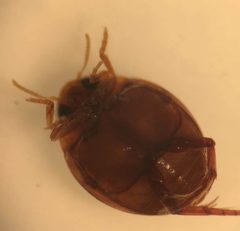
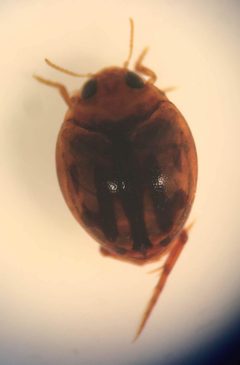
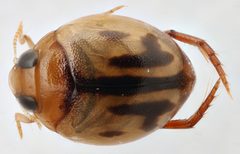
6Desmopachria is a of predaceous diving beetles in the Dytiscidae, tribe Hyphydrini. The genus contains over 80 described distributed primarily in the Americas, from the United States through Central America to South America, with particular diversity in the Amazon basin and Caribbean islands. Species are associated with aquatic including river floodplains and high-altitude forest streams. Multiple new species have been described in recent decades, indicating ongoing taxonomic work and likely remaining undescribed diversity.
Pronunciation
How to pronounce Desmopachria: /ˌdɛsmoʊˈpækriə/
These audio files are automatically generated. While they are not always 100% accurate, they are a good starting point.
Identification
Identification to level requires examination of male genitalia, which provide diagnostic characters. The is distinguished from other Hyphydrini by a combination of morphological features, though specific diagnostic traits for the genus versus closely related are not detailed in available sources.
Images
Habitat
Aquatic including river floodplains (várzea) and high-altitude forest streams above 1000 m elevation. Some occupy temporary or seasonal water bodies.
Distribution
Americas: United States (including Vermont), Caribbean (Cuba, Hispaniola), Central America, and South America (Amazon basin, Colombia, Brazil, Peru, and elsewhere). Specific records include Amazonas and Pará states in Brazil, multiple departments in Colombia, and mountainous regions of Cuba (Macizo de Guamuhaya, Sierra Maestra, Nipe-Sagua-Baracoa).
Similar Taxa
- Other Hyphydrini generaShare Hydroporinae and tribe Hyphydrini; distinguished by morphological features including male genitalia structure
More Details
Taxonomic activity
Nineteen new were described in a 2022 revision, indicating the remains taxonomically active with substantial undescribed diversity.
Conservation status
Individual may be locally with restricted ranges; D. tarda is noted as endemic to Cuba.
Sources and further reading
- BugGuide
- Wikipedia
- GBIF taxonomy match
- iNaturalist taxon
- NCBI Taxonomy
- Catalogue of Life
- Four new species of Desmopachria Babington (Insecta, Coleoptera, Dytiscidae) from the Amazon river floodplain
- New Records of Desmopachria tarda Spangler (Coleoptera: Dytiscidae), an Endemic Species from Cuba, with Habitat Notes
- A new species of Desmopachria Babington (Coleoptera: Dytiscidae) from Cuba with a prediction of its geographic distribution and notes on other Cuban species of the genus
- Nineteen new species of Desmopachria Babington, 1841 (Coleoptera, Adephaga, Dytiscidae, Hydroporinae, Hyphydrini) with notes on the taxonomy of the genus.