
Tachyta falli
(Hayward, 1900)
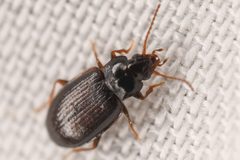
Tachyta falli is a small ground beetle in the Carabidae, first described by Hayward in 1900. It belongs to the tribe Bembidiini within the Trechinae. The species is known from North America, with records from both the United States and Canada. Like other members of its , it is likely associated with moist or riparian , though specific ecological details remain poorly documented.
Pronunciation
How to pronounce Tachyta falli: //tæˈkaɪtə ˈfælaɪ//
These audio files are automatically generated. While they are not always 100% accurate, they are a good starting point.
Identification
Members of the Tachyta are small ground beetles, typically measuring 3-5 mm in length. Tachyta falli can be distinguished from by subtle differences in elytral microsculpture, pronotal shape, and male genitalia. Accurate identification to level requires examination of these microscopic features and comparison with or authoritative keys. The species lacks distinctive color patterns that would allow reliable field identification.
Images
Distribution
North America. Documented from Canada and the United States. GBIF records indicate presence in both countries, though specific provincial and state records are sparse.
Similar Taxa
- Tachyta nanaOverlapping distribution in North America and similar small size; requires examination of male genitalia and pronotal proportions for reliable separation.
- Other Bembidiini genera (e.g., Bembidion, Asaphidion)Similar small size and general habitus; Tachyta typically have more reduced wings and are associated with more specialized microhabitats.
More Details
Taxonomic Note
The Tachyta contains approximately 20 worldwide, with most diversity in the Holarctic region. The group has undergone taxonomic revision, and species boundaries remain challenging to determine without detailed morphological study.
Data Deficiency
Tachyta falli is extremely poorly known in the scientific literature. The iNaturalist platform records only 3 observations, and published ecological studies specifically addressing this are effectively absent. Most information must be inferred from -level characteristics, which carries substantial uncertainty.
Sources and further reading
- BugGuide
- Wikipedia
- GBIF taxonomy match
- iNaturalist taxon
- Falling Temperatures Do Not Necessarily Mean Fewer Insects
- An arboreal fishing spider | Beetles In The Bush
- National Meadows Day 2022 in Scotland - Buglife Blog - Buglife
- National Meadows Day 2023 in Scotland - Buglife Blog - Buglife
- Greet the class of 2038 as periodical cicadas hatch in the DMV: Magicicada spp. — Bug of the Week
- Founding mothers - Polistes dominulus — Bug of the Week