
Abax parallelepipedus
(Piller & Mitterpacher, 1783)
Abax parallelepipedus is a ground beetle (Carabidae) native to Europe with an introduced in North America. It is among the larger in its and has been studied for its potential as a agent of slugs in agricultural systems. Molecular evidence places this species in a distinct clade with A. fiorii, A. ovalis, and A. pyrenaeus, separate from the 'parallelus' group within the genus.
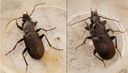
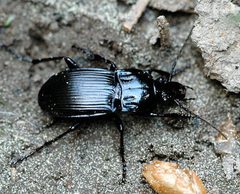
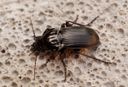
Pronunciation
How to pronounce Abax parallelepipedus: /ˈæbaks pəˌræləˌlɛˈpɪpɪdəs/
These audio files are automatically generated. While they are not always 100% accurate, they are a good starting point.
Identification
As a member of the Abax, this is characterized by the typical ground beetle with elongated body form. Specific diagnostic features distinguishing it from are not detailed in available sources. The species is among the larger members of the genus Abax.
Images
Habitat
Native occur in temperate forests of the southern axis of the Eastern and Central Alps. The has been observed in woody within hedgerow network landscapes and in agricultural settings including lettuce crops under polythene tunnels.
Distribution
Native to Europe: Austria, Belgium, Bosnia and Herzegovina, Bulgaria, Croatia, Czech Republic, Denmark, Estonia, France, Germany, Great Britain, Hungary, Italy, Kaliningrad, Latvia (doubtful), Liechtenstein, Luxembourg, Moldova, Norway, Poland, central and southern Russia, Slovakia, Slovenia, Spain, Sweden, Switzerland, Netherlands, Ukraine, and Yugoslavia. Introduced to North America, first detected in 1965; established in Atlantic Canada and Jamaica.
Diet
Slugs, specifically Deroceras reticulatum, have been documented as prey in agricultural contexts. The is .
Behavior
Predatory on slugs. Movement patterns in woody of hedgerow networks have been studied via radio-tracing. effectiveness is influenced by crop development stage and plant size; females have been shown to be significantly more effective at reducing slug numbers than males, particularly in plots with small plants. Beetles are generally incapable of capturing slugs within large plants but are effective at soil level.
Ecological Role
; studied as a agent for slugs in agricultural systems. May contribute to natural regulation of slug in native forest .
Human Relevance
Investigated for its potential in of pest slugs in lettuce crops. Its effectiveness varies with crop development stage and sex, with females showing superior control capability. Introduced in North America represent a non-native establishment.
Similar Taxa
- Abax parallelusMember of the 'parallelus' group that forms a separate clade from A. parallelepipedus based on molecular ; the two groups are not sister despite sharing the subgenus Abax designation.
- Abax schueppeliThe sole member of subgenus Abacopercus, which is sister to all other Abax including A. parallelepipedus; differs in phylogenetic placement and geographic origin in the Carpathians.
- Abax ovalis, A. fiorii, A. pyrenaeusThese form a clade with A. parallelepipedus based on molecular data, sharing a common evolutionary history distinct from other Abax lineages.
More Details
Phylogenetic placement
Molecular analysis using mitochondrial cox1 and nuclear ITS-2 or 28S genes indicates that A. parallelepipedus, together with A. fiorii, A. ovalis, and A. pyrenaeus, forms a clade separate from the 'parallelus' group (A. parallelus, A. carinatus, A. baenningeri, A. pilleri, A. oblongus, A. continuus). This renders the subgenus Abax polyphyletic. The ancestors of Abax likely originated in the Carpathian area, with subsequent expansion to the Alps and Pyrenees.
Sex-based predation differences
In controlled agricultural experiments, female A. parallelepipedus were significantly more effective at reducing slug numbers than males, with this difference being most pronounced in plots containing small lettuce plants.
Sources and further reading
- BugGuide
- Wikipedia
- GBIF taxonomy match
- iNaturalist taxon
- NCBI Taxonomy
- Catalogue of Life
- Cynipidae | Beetles In The Bush
- Hemiptera | Beetles In The Bush | Page 9
- Ted C. MacRae | Beetles In The Bush | Page 8
- The effects of crop development upon slug distribution and control by Abax parallelepipedus (Coleoptera: Carabidae)
- Movements of Abax parallelepipedus (Coleoptera, Carabidae) in woody habitats of a hedgerow network landscape: a radio-tracing study
- Evolutionary inferences about the genus Abax (Coleoptera, Carabidae: Pterostichini) based on molecular data and geographic distribution of taxa.
- The genome sequence of a carabid beetle, Abax parallelepipedus (Piller & Mitterpacher, 1783).