Platynus mannerheimii
(Dejean, 1828)
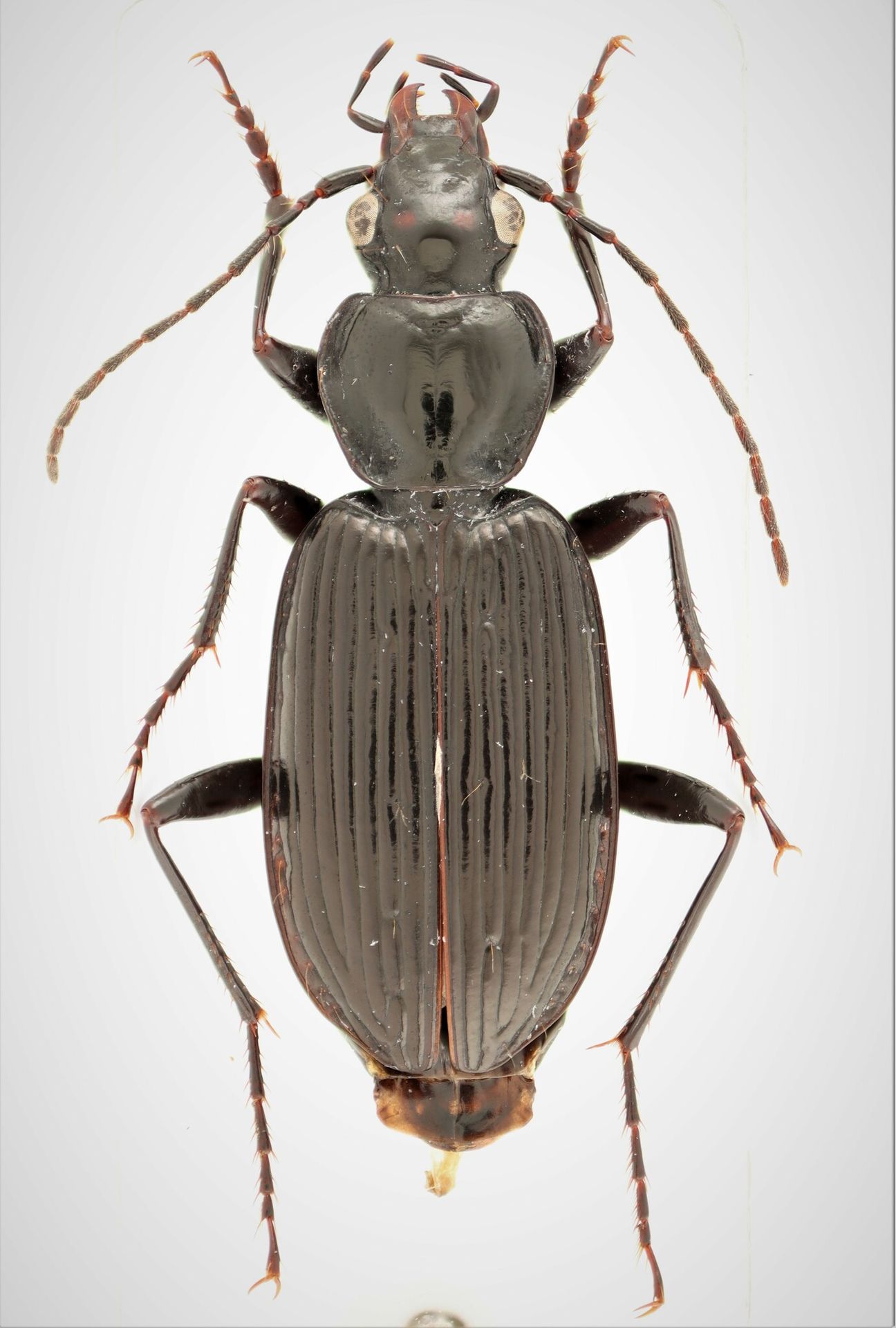
Platynus mannerheimii is a ground beetle in the Carabidae, distributed across and arctic regions of the Northern Hemisphere. It belongs to a large of predominantly forest-dwelling carabids characterized by elongated bodies and long legs adapted for running. The species was described by Dejean in 1828 and is named after the Finnish entomologist Carl Gustaf Mannerheim.
Pronunciation
How to pronounce Platynus mannerheimii: /ˈplætɪnəs ˌmænərˈhaɪmi/
These audio files are automatically generated. While they are not always 100% accurate, they are a good starting point.
Identification
Distinguished from other Platynus by the combination of: pronotum distinctly narrower than elytral base with gently rounded sides; with well-impressed ; and overall slender proportions. Similar to Platynus decentis but with more slender build and different pronotal shape. Examination of male genitalia may be required for definitive identification.
Images
Appearance
Elongate, moderately slender with long, slender legs typical of the Platynus. Body length approximately 10-14 mm. Dark brown to black coloration with faintly shiny . Pronotum narrower than elytral base, with sides gently rounded and slightly constricted basally. Elytra with distinct and intervals. , extending well beyond pronotum. with prominent and distinct frontal furrows.
Habitat
and mixed forests, particularly in moist, shaded environments. Found in forest floor litter, under bark, and in decaying wood. Associated with coniferous and deciduous woodland with abundant ground cover.
Distribution
Holarctic distribution: recorded from Alaska, Canada, Finland, and Estonia. Present across zones of North America and northern Europe.
Seasonality
active during warmer months; specific poorly documented. Likely active from late spring through early autumn based on related .
Behavior
ground-dwelling . Rapid runner characteristic of carabid beetles. Seeks shelter under objects during daylight hours.
Ecological Role
Predatory ground beetle contributing to regulation of soil and litter . Part of forest floor as both and prey for larger animals.
Human Relevance
No documented economic importance. Occasionally encountered by forest researchers and entomologists. Named after Carl Gustaf Mannerheim, significant figure in Finnish entomology.
Similar Taxa
- Platynus decentisSimilar elongated body form and preference; distinguished by more robust build and different pronotal proportions
- Other Platynus speciesRequire examination of genitalia and detailed pronotal/elytral proportions for separation
More Details
Nomenclatural note
Original spelling 'mannerheimii' honors Carl Gustaf Mannerheim (1797-1854). Variant spelling 'mannerheimi' appears in some sources but is not the accepted form.