
Badister grandiceps
Casey, 1920
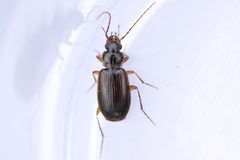
Badister grandiceps is a of ground beetle in the Badister, first described by Thomas L. Casey in 1920. It is distributed across Canada and the United States in North America. The species is characterized by its brown coloration. Like other members of the genus Badister, it belongs to the tribe Badisterini within the Harpalinae of the Carabidae.
Pronunciation
How to pronounce Badister grandiceps: /ˈbædɪstər ˈɡrændɪsɛps/
These audio files are automatically generated. While they are not always 100% accurate, they are a good starting point.
Identification
The can be distinguished from other Badister species by specific morphological features described in the original description by Casey (1920), though detailed diagnostic characters are not widely documented in available sources. As with many ground beetles, examination of genitalia and other fine structural characters is typically required for definitive species-level identification within the .
Images
Distribution
Canada and the United States (North America).
Ecological Role
As a ground beetle, Badister grandiceps likely functions as a in soil and ground-level , contributing to regulation of . Members of the Badister are typically found in moist environments near water bodies.
More Details
Taxonomic Authority
First described by Thomas Lincoln Casey in 1920, a prominent American entomologist known for his extensive work on North American beetles.
Genus Characteristics
Badister is a of small ground beetles in the tribe Badisterini. in this genus are typically associated with riparian or wetland and are recognized by their compact body form and characteristic elytral striation patterns.