
Apristus
Chaudoir, 1846
Species Guides
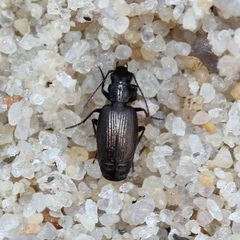
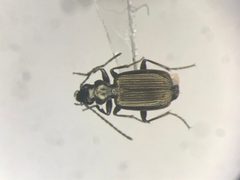
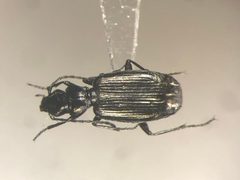
6Apristus is a of ground beetles in the Carabidae, first described by Chaudoir in 1846. The genus comprises approximately 60 described distributed across multiple continents including North America, Europe, Asia, and Africa. Members are classified within the subtribe Lionychina of the tribe Lebiini. The genus exhibits considerable diversity in body form and coloration, with many species showing metallic or iridescent .
Pronunciation
How to pronounce Apristus: /æˈprɪstʊs/
These audio files are automatically generated. While they are not always 100% accurate, they are a good starting point.
Identification
Apristus can be recognized by their placement within the subtribe Lionychina, characterized by specific combinations of elytral and pronotal features typical of this group. Many species display metallic coloration ranging from coppery to bluish or greenish hues. The lacks the pronounced setigerous punctures on the seen in some related genera. Species-level identification requires examination of male genitalia and detailed morphometric analysis.
Images
Distribution
Documented from North America (including the United States and Mexico), Europe, North Africa, the Middle East, Central Asia, and East Asia including China and Japan. Specific distribution varies considerably by , with some showing restricted ranges and others broader distributions.
Similar Taxa
- LionychusAlso placed in subtribe Lionychina; both share similar body plans and metallic coloration, requiring careful examination of pronotal and elytral microsculpture for separation
- DromiusOverlaps in general habitus and preferences; Apristus often distinguished by differences in antennal structure and elytral punctation patterns
More Details
Taxonomic History
The was established by Chaudoir in 1846 and has undergone numerous revisions, particularly by Mateu in the late 20th century who described many new from Asia and Africa. The North American fauna was revised by Casey in 1920. The subtribal placement in Lionychina reflects ongoing refinements in the classification of the speciose tribe Lebiini.
Species Diversity
With approximately 60 described , Apristus represents a moderately diverse within Lebiinae. Species are distributed across temperate and tropical regions, with notable radiations in the Mediterranean region, Central Asia, and North America. Several species remain poorly known with limited biological data available.