
Stenolophus lineola
(Fabricius, 1775)
Lined Stenolophus
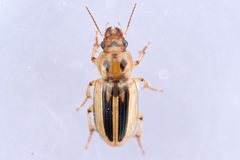
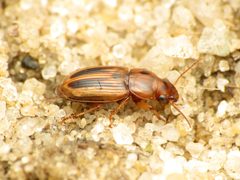
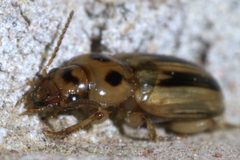
Stenolophus lineola is a of ground beetle in the Carabidae, commonly known as the Lined Stenolophus. It occurs across North America, with records from Canada and the United States. The species belongs to a of small, often brightly marked ground beetles that frequent open, moist . As a member of the tribe Stenolophini, it shares characteristics with other seedcorn beetles that are sometimes associated with agricultural fields and grassy areas.
Pronunciation
How to pronounce Stenolophus lineola: //stɛˈnɒləfəs ˌlɪniˈoʊlə//
These audio files are automatically generated. While they are not always 100% accurate, they are a good starting point.
Identification
Members of Stenolophus are small ground beetles, typically under 10 mm in length, with relatively long legs and . The can be distinguished from similar small carabids by the combination of: pronotum with distinct lateral margins; often with (grooves) and sometimes with pale markings or patterns; and the presence of setae on the elytra. Stenolophus lineola specifically may be recognized by fine linear markings on the elytra, though -level identification in this genus often requires examination of male genitalia. It can be separated from the similar genus Agonum by the more convex body form and different elytral punctation.
Images
Habitat
in the Stenolophus are typically found in moist, open including grasslands, meadows, agricultural fields, and the margins of wetlands. They are often associated with bare or sparsely vegetated ground. The specific habitat preferences of S. lineola are not well documented, but it likely shares the general ecological tendencies of .
Distribution
Stenolophus lineola is recorded from North America, with confirmed occurrences in Canada and the United States. GBIF and iNaturalist records indicate presence across much of the continent, though precise range boundaries are not well defined in available sources.
Behavior
As with most ground beetles, Stenolophus are primarily or and scavengers. They are fast-running beetles that forage on the ground surface. Specific behavioral observations for S. lineola are not documented in available sources.
Ecological Role
Ground beetles in the Stenolophus contribute to soil as of small and as scavengers. Some in related genera are known to feed on seeds, earning the group the 'seedcorn beetles.' Their ecological function in natural and agricultural systems includes on pest insects and weed seeds, though specific roles for S. lineola have not been studied.
Human Relevance
in the Stenolophus are generally not considered significant agricultural pests. Some related species have been documented in corn fields and other crops where they may contribute to of pests or, in some cases, minor damage to seeds. Stenolophus lineola itself has no documented specific economic impact.
Similar Taxa
- Stenolophus leconteiSimilar small size and general appearance; both occur in North America and share preferences. Identification requires examination of elytral microsculpture and male genitalia.
- Stenolophus rotundatusAnother small North American Stenolophus with which S. lineola may be confused. Differences in elytral markings and punctation are diagnostic.
- Agonum spp.Similar small, shiny ground beetles in moist . Agonum typically have more flattened bodies and lack the distinct elytral setae and striation patterns of Stenolophus.
More Details
Taxonomic Note
The Stenolophus is part of the tribe Stenolophini, a group sometimes referred to as 'seedcorn beetles' due to the seed-feeding habits documented in some . However, not all species in the genus are confirmed seed-feeders, and the diet of S. lineola specifically has not been investigated.
Observation Data
iNaturalist records indicate this is relatively frequently observed, with over 1,400 observations contributing to its distribution map. This suggests it is not rare, though detailed biological studies are lacking.
Sources and further reading
- BugGuide
- Wikipedia
- GBIF taxonomy match
- iNaturalist taxon
- NCBI Taxonomy
- Stalk-boring insect pests - AgriLife Extension Entomology
- Bug Eric: Spider Sunday: Striped Lynx Spider
- Bug Eric: Wasp Wednesday: Anacrabro ocellatus
- Sulfoxaflor Found to Be Less Harmful to Beneficial Predators of Soybean Aphids
- Glyphosate and Acetamiprid Have Relatively Low Toxicity for Honey Bees
- Bug Eric: August 2011