
Selenophorus discopunctatus
Dejean, 1829
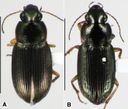
Selenophorus discopunctatus is a ground beetle in the Carabidae, first described by Dejean in 1829. The species has been recorded in both North America and parts of South America and the Caribbean, though published sources conflict on its precise range. It belongs to the Selenophorus, a group of ground beetles characterized by their (burrowing) adaptations. Available documentation is limited, with few observational records.
Pronunciation
How to pronounce Selenophorus discopunctatus: //ˌsɛləˈnɒfərəs ˌdɪskəpʌŋkˈtætəs//
These audio files are automatically generated. While they are not always 100% accurate, they are a good starting point.
Images
Distribution
Recorded from North America, Argentina, Brazil, Colombia, Cuba, and Hispaniola. The full extent of its native versus introduced range is unresolved.
More Details
Taxonomic note
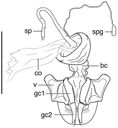
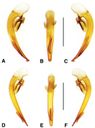
The Selenophorus contains numerous with limited diagnostic descriptions, making species-level identification challenging without examination of male genitalia.
Data quality
This has only 9 observations on iNaturalist and minimal published biological data. Most traits remain undocumented.