
Harpalus fraternus
LeConte, 1852
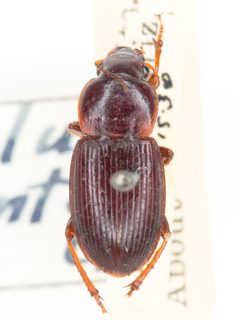
Harpalus fraternus is a of ground beetle in the Harpalinae. It was described by John Lawrence LeConte in 1852. The species is native to western Canada and the United States. Like other members of the Harpalus, it is a ground-dwelling .
Pronunciation
How to pronounce Harpalus fraternus: //ˈhɑːrpələs frəˈtɜːrnəs//
These audio files are automatically generated. While they are not always 100% accurate, they are a good starting point.
Identification
Can be distinguished from similar Harpalus by the arrangement of spines on the protibia: ventroapical spines number one to three (rarely four), and when three or four are present, the preapical spines on the outer margin are isolated from the spines rather than arranged in a single continuous row.
Images
Habitat
Ground-dwelling; specific microhabitat preferences are not well documented in available sources.
Distribution
Native to western Canada and the western United States.
Ecological Role
As a ground beetle, likely functions as a of small and possibly as a granivore, as is common in the Harpalus.
Similar Taxa
- Other Harpalus speciesShare similar general ; distinguished primarily by protibial spine arrangement and other subtle structural characters.
More Details
Type information
Described by LeConte in 1852 based on specimens from western North America.
Sources and further reading
- BugGuide
- Wikipedia
- GBIF taxonomy match
- iNaturalist taxon
- NCBI Taxonomy
- Beneficial Beetle Diversity Blooms on Strip-Tilled Farms
- T.G.I.Flyday—Black horse fly (Tabanus atratus) | Beetles In The Bush
- November | 2012 | Beetles In The Bush | Page 2
- conservation | Beetles In The Bush
- Carabidae | Beetles In The Bush
- Bug of the Week