
Myrmecoblatta wheeleri
Hebard, 1917
Wheeler's Ant Cockroach
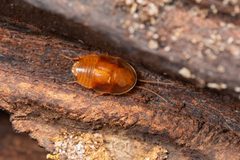
Myrmecoblatta wheeleri is a small, myrmecophilous known for its obligate association with colonies. First described by Hebard in 1917, this species inhabits the nest chambers of ants, where it has been observed in Rica, Guatemala, and Florida. The species represents one of the few documented cases of true myrmecophily in cockroaches, having evolved specialized adaptations for life within ant societies. Its honors the American entomologist William Morton Wheeler, who conducted pioneering studies on ant and myrmecophilous organisms.
Pronunciation
How to pronounce Myrmecoblatta wheeleri: /mɜrmɛkoʊˈblætə ˈʍiːləriː/
These audio files are automatically generated. While they are not always 100% accurate, they are a good starting point.
Images
Habitat
Found exclusively within nest chambers; occupies the subterranean or cavity-dwelling nests of ant colonies in tropical and subtropical regions.
Distribution
Rica; Guatemala; Florida (USA); Middle America; North America
Host Associations
- Formicidae - myrmecophilyObligate association with colonies; specific ant not documented in available sources
Behavior
Exhibits true myrmecophily, living as an within nests. The has evolved mechanisms to avoid ant aggression and integrate into colony life, though specific behavioral adaptations remain undocumented in published literature.
Ecological Role
Myrmecophilous ; occupies a specialized as a commensal or within colonies. Potential role in nest dynamics as a scavenger or , though specific functions have not been studied.
Similar Taxa
- Myrmecoblatta santschiiCongeneric with similar myrmecophilous lifestyle; distinguished by geographic distribution and subtle morphological differences
- Attaphila spp.Another of myrmecophilous associated with leaf-cutter ants; differs in specificity and morphological adaptations for fungus-growing colonies
Sources and further reading
- BugGuide
- GBIF taxonomy match
- iNaturalist taxon
- Meet a Male Mantis in a Patch of Blanket Flowers | Bug Squad
- Magical Mantis Moments | Bug Squad
- Bembicid Holdings | Entomology Research Museum
- Meloidae Holdings | Entomology Research Museum
- Bug Eric: New Mexico Dragonfly Blitz - Day 4
- Let’s make a deal! | Beetles In The Bush