
Zootermopsis laticeps
(Banks, 1906)
Arizona dampwood termite, wide-headed rottenwood termite, southwestern rottenwood termite
Zootermopsis laticeps is a dampwood native to arid regions of southwestern North America. It inhabits rotting wood in standing trees near water sources, particularly in riparian areas. Colonies are founded by winged reproductives after and persist as long as dead wood resources remain available. The is difficult to distinguish from without specialized techniques such as near-infrared spectroscopy or cuticular hydrocarbon analysis.
Pronunciation
How to pronounce Zootermopsis laticeps: /ˌzoʊ.oʊ.tɜːrˈmɒpsɪs ˈlætɪˌsɛps/
These audio files are automatically generated. While they are not always 100% accurate, they are a good starting point.
Identification
within Zootermopsis are morphologically similar and difficult to separate visually. Near-infrared spectroscopy has been demonstrated to distinguish species and with over 99% . Cuticular hydrocarbon analysis provides an alternative method but has recognized limitations. No reliable external morphological characters for field identification are documented in available sources.
Images
Habitat
Occupies rotting wood in standing trees in riparian locations. Moisture present in standing trees appears critical to survival; the has not been documented in fallen logs or tree stumps. Specific trees include Populus (cottonwood), Salix (willow), and Platanus (sycamore).
Distribution
North America, ranging from Arizona and New Mexico through northern Mexico. Documented in El Paso County, Texas. Occurs in arid parts of southwestern North America.
Seasonality
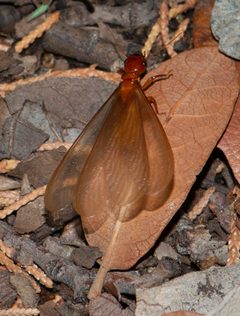
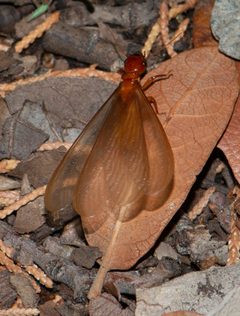
Swarming of (winged reproductives) has been documented; specific timing varies by region. In the southwestern United States, swarms are frequently associated with monsoon onset and changes in humidity and air pressure.
Diet
Rotten wood, digested with assistance from symbiotic bacteria and protozoa in the gut. Opportunistic consumption of injured colony members and from other colonies has been observed.
Life Cycle
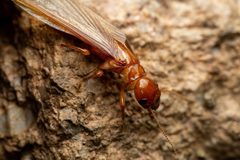
Colonies are founded by a winged male and female after . Wings are shed, and reproductives enter dead wood under bark, often through holes. The first develops into a small soldier with dark and slashing . Subsequent eggs become that expand the colony by chewing wood. When dead wood is exhausted, the colony dies. Some workers develop into full-sized soldiers; others develop wingbuds and differentiate into primary reproductives, becoming more numerous as colony resources deplete. Secondary reproductives—golden-coloured and wingless—may develop from workers after death of primary reproductives, often following colony mergers due to conflict with neighboring colonies.
Behavior
Colonies defend against other and ants using soldier . Colony mergers occur following conflict between neighboring colonies, with merged colonies potentially containing numerous secondary reproductives. are attracted to lights.
Ecological Role
Decomposer of dead wood in riparian . Contributes to nutrient cycling through cellulose digestion.
Human Relevance
may enter structures when attracted to outdoor lights, potentially causing concern. Not a significant structural pest compared to subterranean due to reliance on damp standing wood rather than dry structural timber.
Similar Taxa
- Zootermopsis angusticollisCongeneric dampwood ; separation requires near-infrared spectroscopy or cuticular hydrocarbon analysis
- Zootermopsis nevadensisCongeneric with overlapping range; morphologically similar and requires chemical or spectroscopic methods for reliable identification
Sources and further reading
- BugGuide
- Wikipedia
- GBIF taxonomy match
- iNaturalist taxon
- NCBI Taxonomy
- Catalogue of Life
- Bug Eric: Flying Ants
- Mite on White | Beetles In The Bush
- The 2nd-oldest Known Myrmicine Ant | Beetles In The Bush
- Swarming Dates and Distribution of Zootermopsis laticeps Banks (Isoptera: Termopsidae) Alates in El Paso County, Texas
- Observations on the Nesting Site andBiology of the Arizona Damp‐Wood TermiteZootermopsis Laticeps (Banks)(Hodotermitidae)