
Parcoblatta zebra
Hebard, 1917
banded wood cockroach, zebra wood cockroach
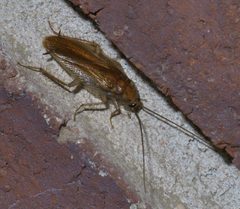
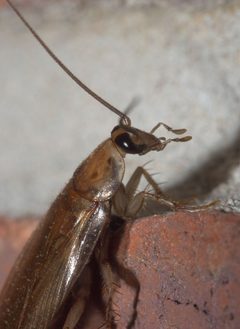
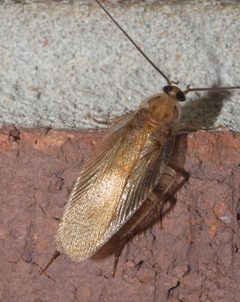
Parcoblatta zebra is a native North American wood distinguished by dark transverse bands across the . Males possess fully developed tegmina and can fly, while females are larger, more robust, and flightless with shorter tegmina. The exhibits pronounced in both and coloration. It inhabits wooded environments in the southeastern and midwestern United States.
Pronunciation
How to pronounce Parcoblatta zebra: /ˌpɑrkoʊˈblætə ˈzɛbrə/
These audio files are automatically generated. While they are not always 100% accurate, they are a good starting point.
Identification
Males distinguished from other Parcoblatta by the pronounced tuft of agglutinated hairs on the segment—similar but less developed structure occurs only in P. americana. Females uniquely identified among by dark transverse banding on abdominal segments. Both sexes show characteristic abdominal banding pattern. Pronotum shape differs between sexes: elliptical and mid-widest in males, base-widest in females.
Images
Habitat
Found in cavity of dead sweet gum tree, under signs on shortleaf pine, and beneath logs in cypress swamp. Occupies wooded including forests with standing dead trees and swampy areas.
Distribution
United States: Alabama, Illinois, Indiana, Louisiana, Mississippi, Tennessee, Texas. Possible occurrence in New Mexico.
Ecological Role
Prey for cockroach wasps (Ampulex canaliculata), which use Parcoblatta as favored . Contributes to forest detritus as decomposer.
Similar Taxa
- Parcoblatta americanaShares male segment hair tuft specialization, but this structure is 'decidedly greater' in P. zebra; lacks the distinct abdominal banding of P. zebra
- Other Parcoblatta speciesFemale P. zebra uniquely shows dark transverse abdominal banding among ; male pronotum shape and spacing also differ
More Details
Taxonomic note
placement varies between sources: Blattellidae (iNaturalist/Wikipedia) versus Ectobiidae (GBIF). Both reflect ongoing classification revisions within Blattodea.
Male genital specialization
The agglutinated hair tuft on the male segment represents a -specific secondary sexual characteristic of unknown function, shared only with P. americana but more developed in P. zebra.
Sources and further reading
- BugGuide
- Wikipedia
- GBIF taxonomy match
- iNaturalist taxon
- UC Davis Researcher Targeting Zebra Chip: It's Not a Chip You Want | Bug Squad
- Bug Eric: Zebra Jumper
- Passionate about passion fruit - Zebra longwing butterflies, Heliconius charitonius — Bug of the Week
- When life gives you zebra mussels | Blog
- September | 2022 | Beetles In The Bush
- Bug Eric: Wasp Wednesday: Ampulex canaliculata