
Proisotoma
Börner, 1901
springtails
Species Guides
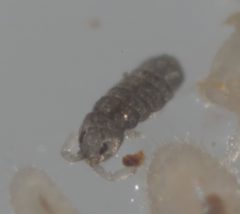
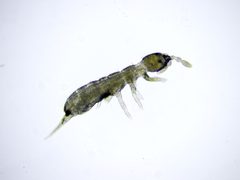
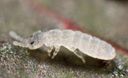
1Proisotoma is a of elongate-bodied springtails (Collembola) in the Isotomidae, established by Börner in 1901. The genus comprises at least 50 described distributed across diverse biomes including tropical, temperate, Antarctic, and desert regions. Species within this genus are primarily soil-dwelling and have been widely used as bioindicator organisms in ecotoxicological studies due to their sensitivity to environmental contaminants.
Pronunciation
How to pronounce Proisotoma: //ˌproʊ.aɪˈsɒtə.mə//
These audio files are automatically generated. While they are not always 100% accurate, they are a good starting point.
Images
Habitat
Soil-dwelling; occupies terrestrial ranging from tropical forests to Antarctic and desert environments. Laboratory cultures have been maintained on artificial substrates comprising plaster of Paris and charcoal mixtures.
Distribution
Global distribution spanning multiple biogeographic regions including: African Indian Desert, Amazon basin, Andean region, Antarctic & Subantarctic, and Antillean & South Florida. Specific records include Kerala, India.
Life Cycle
-laying . In Proisotoma minuta, eggs hatch in approximately 10.6 days at 17.5°C and 6 days at 23°C. Development proceeds through stages to reproductive maturity. Temperature affects development rate but temperature-size responses are generally weak across ontogenetic stages and .
Human Relevance
Used extensively as a standard test organism in ecotoxicological research, particularly for assessing soil by heavy metals (cadmium, , lead, zinc) and volatile organic compounds such as methyl tert-butyl ether. One case report documents apparent of a domestic cat by Proisotoma spp., presenting with pruritic dermatitis; the organisms were identified from skin scrapings and clinical recovery followed treatment.
Sources and further reading
- BugGuide
- Wikipedia
- GBIF taxonomy match
- iNaturalist taxon
- NCBI Taxonomy
- Catalogue of Life
- Morphological Variations in the Local Populations of the Soil Collembola Proisotoma (Clavisotoma) fitchioides (Denis 1947) (Insecta) in Kerala
- Some observations on the biology and taxonomy ofProisotoma stachiGoto, 1957 (Insecta, Collembola: Isotomidae)
- Figure 4: Changes in the body size distribution at maturity of F1 individuals at quantiles 0.75, 0.85 and 0.95 as a function of experimental temperature in (A) Folsomia candida and (B) Proisotoma minuta .
- The effects of cadmium, copper, lead, and zinc on the growth and reproduction of Proisotoma minuta Tullberg (Collembola)
- Effect of laboratory culture conditions on population growth ofProisotoma minuta(Tullberg) (Collembola: Isotomidae)
- A case of an apparent infestation by Proisotoma spp. springtails (Collembola: Isotomidae) in a cat
- Toxicity of methyl tert butyl ether to soil invertebrates (springtails: Folsomia candida, Proisotoma minuta, and Onychiurus folsomi) and lettuce (Lactuca sativa)