
Isotomidae
Schäffer, 1896
Smooth Springtails
Subfamily Guides
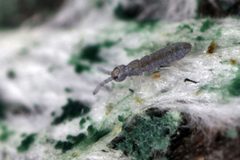
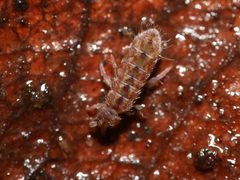
3is a large of springtails in the order Entomobryomorpha, characterized by elongated, smooth-bodied forms. The family contains approximately 109 and is distributed across the Holarctic region and globally. Members are typically found in soil, leaf litter, and under bark, where they contribute to decomposition processes. The family has been subject to taxonomic revision, with -level classifications undergoing reevaluation based on molecular .

Pronunciation
How to pronounce Isotomidae: /ˈaɪsəˌtoʊmɪˌdiː/
These audio files are automatically generated. While they are not always 100% accurate, they are a good starting point.
Identification
Distinguished from other Entomobryomorpha by the combination of elongate body form and smooth, relatively unornamented . Distinguished from Entomobryidae by generally shorter and less pronounced scaling. Distinguished from Tomoceridae by body proportions and lack of distinctive banding patterns. Definitive identification to or requires microscopic examination of chaetotaxy, mouthpart structure (particularly presence/absence of sublobal hairs on maxillary outer lobe), and .
Images
Habitat
Soil and leaf litter; under bark of dead trees; decaying wood; moist terrestrial microhabitats. Some associated with riparian environments.
Distribution
Holarctic distribution with global presence; recorded from North America, Europe, Japan, and South America (Brazil). Agrenia distributed in arctic, , and montane regions of the northern hemisphere.
Seasonality
Active year-round in suitable microhabitats; observed on warm winter days in temperate regions.
Diet
Feeding habits inferred from association suggest detritivory and consumption of decaying organic matter, fungi, and microflora. Specific dietary data for level not available.
Life Cycle
Development through direct without pupal stage; details of and stages vary by .
Behavior
Aggregative documented in Folsomia candida, with behavior influenced by previous environmental conditioning. Some exhibit jumping behavior via ; others lack functional jumping mechanism.
Ecological Role
Contributes to soil decomposition processes and nutrient cycling in forest floor .
Human Relevance
Used as bioindicators for soil health and environmental monitoring; Folsomia candida commonly employed in laboratory testing and ecological research.
Similar Taxa
- EntomobryidaeSimilar elongated body form, but typically possess longer and more prominent body scaling or setae
- TomoceridaeSimilar preferences, but distinguished by distinctive body banding patterns and different body proportions
- PoduridaeSpringtails with different body shape (more globular or humpbacked) and shorter, stouter appendages
Misconceptions
Historically classified as insects; now recognized as non-insect hexapods (). '' may incorrectly imply all members jump; some lack functional for jumping.
More Details
Taxonomic Complexity
Isotominae has been shown to be based on mitogenome , indicating ongoing taxonomic revision is needed.
Research Importance
Folsomia includes F. candida, one of the most widely used model organisms in soil ecotoxicology and research.
Sources and further reading
- BugGuide
- Wikipedia
- GBIF taxonomy match
- iNaturalist taxon
- NCBI Taxonomy
- Catalogue of Life
- Bug Eric: New Year’s Insects and Spiders
- Brazil Bugs #12 – Desafio de identificação #5 | Beetles In The Bush
- Sexual behaviour in Isotomidae (Collembola)
- Revision of the genus Agrenia Börner, 1906 (Collembola: Isotomidae)
- Aggregative behaviour in Folsomia Candida (Collembola : Isotomidae), with respect to previous conditioning
- Observations on the Biology of lsotoma olivacea TULLBERG, 1871 ( Collembola: Isotomidae)
- Phylogenetic Reconstructions Based on Mitogenomes Reveal the Paraphyly of the Subfamily Isotominae of Isotomidae (Collembola: Entomobryomorpha).