
Isotomiella
Bagnall, 1939
Species Guides
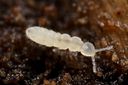
1Isotomiella is a of springtails (Collembola: Isotomidae) established by Bagnall in 1939. The genus contains (soil-dwelling) with broad Holarctic distribution. The most studied species, Isotomiella minor, exhibits parthenogenetic and shows significant intraspecific genetic and physiological variation across urban and natural .
Pronunciation
How to pronounce Isotomiella: /ˌaɪsəˌtoʊ.miˈɛl.lə/
These audio files are automatically generated. While they are not always 100% accurate, they are a good starting point.
Images
Habitat
Humid forest soils, particularly mountain spruce and beech forests; also present in thermophilous woodlands, grasslands, meadows, and urban including parks, lawns, and woodland fragments. Classified as mesohygrophilous. (soil-dwelling) lifestyle.
Distribution
Broad Holarctic distribution beyond the high Arctic, spanning temperate zones across elevational gradients from lowlands to subalpine forests. Records from Central Europe (Slovakia), with potential wider distribution indicated by GBIF records from African Indian Desert, Amazon, Andean, Antillean & S. Florida, and Arctic & Sub-arctic regions.
Behavior
Eurytopic with wide ecological plasticity. Limited of genetic lineages between natural and urban has been observed, suggesting possible ecological filtering between types.
Ecological Role
Abundant and diverse component of soil fauna in forest and urban .
More Details
Genetic diversity
Isotomiella minor exhibits high cryptic genetic diversity, with nine distinct mitochondrial lineages (MOTUs) identified in Slovakia alone, showing genetic distances of 11-27% (K2P). Urban often contain mixtures of lineages while natural populations tend to be monophyletic with site-specific haplotypes.
Physiological variation
Natural from cooler karst landscapes show significantly higher cold than urban populations, with cold tolerance correlating strongly with mean soil temperature. Body size decreases with increasing temperature, following Atkinson's temperature-size rule.
Reproduction
At least one (I. minor) is known to be parthenogenetic; reproductive mode for other species in the is not documented.
Sources and further reading
- BugGuide
- Wikipedia
- GBIF taxonomy match
- iNaturalist taxon
- NCBI Taxonomy
- Catalogue of Life
- Temperature shapes the cold tolerance and body size of the springtail Isotomiella minor (Hexapoda, Collembola) in contrasting environments.
- Structure of the genetic variation in the common springtail Isotomiellaminor (Hexapoda, Collembola) from contrasting habitats: evidence for different genetic lineages at a regional scale?