
Anurophorinae
Börner C, 1901
Genus Guides
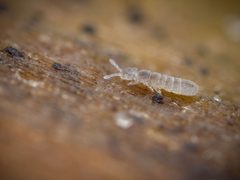
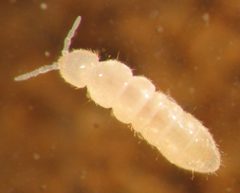
8Anurophorinae is a of springtails (Collembola) within the Isotomidae, established by Börner in 1901. Members of this subfamily are characterized by the absence of a (springing organ), a trait reflected in the name 'Anurophorinae' (meaning 'tailless'). These small hexapods are part of the diverse soil and leaf litter fauna, contributing to decomposition processes. The subfamily is moderately well-represented in global collections with over 1,100 iNaturalist observations recorded.
Pronunciation
How to pronounce Anurophorinae: /ænˌʊɹoʊfəˈraɪniː/
These audio files are automatically generated. While they are not always 100% accurate, they are a good starting point.
Identification
Distinguished from other Isotomidae by the complete absence of the . The lack of a springing organ separates Anurophorinae from Entomobryinae and other furcula-bearing groups. Identification to or level requires examination of mouthparts, chaetotaxy (bristle arrangement), and antennal structure under magnification.
Images
Habitat
Soil and leaf litter , including forest floors, humus layers, and organic-rich substrates. Often found in moist microhabitats where decomposition activity is high.
Distribution
Widespread in temperate and regions; recorded from North America, Europe, and Asia. Distribution records reflect the global range of the Isotomidae, with particular diversity in northern hemisphere forest .
Seasonality
Active year-round in suitable microhabitats, with peaking during moist periods in spring and autumn. Activity reduced during extreme drought or freezing conditions.
Diet
Decomposers; feed on decaying organic matter, fungal , and microbial films in soil and litter layers.
Life Cycle
Direct development without . hatch into miniature versions of . Molting continues throughout life, with number of instars varying among . primarily sexual, though has been reported in some collembolan groups.
Behavior
Non-jumping locomotion due to absence; movement by and crawling. Tends to remain in deeper soil and litter layers rather than surface favored by jumping springtails.
Ecological Role
Contributes to soil decomposition and nutrient cycling through consumption of fungi and organic detritus. Serves as prey for small soil arthropods and other . Part of the soil microfood web supporting decomposition processes.
Human Relevance
No direct economic importance. Indirectly beneficial through contributions to soil health and function. Occasionally collected for scientific study of soil fauna and .
Similar Taxa
- EntomobryinaeSimilar body form within Isotomidae but possesses well-developed for jumping; occupies more surface-oriented .
- IsotominaeAnother Isotomidae with present; differs in furcula and typically has different antennal proportions.
- Other furcula-less CollembolaOnychiuridae and some Poduromorpha also lack but differ in body shape (more globular), mouthpart structure, and preferences.
Misconceptions
The name '' is misleading for this group as they completely lack the springing organ; they cannot jump and are not found in the aerial or surface typical of jumping springtails.
More Details
Taxonomic note
The classification of Collembola remains under study, with some authorities placing Anurophorinae as a tribe within Entomobryinae rather than a separate . The authorship is sometimes cited as Börner, 1901, with the original description establishing the group based on absence.
Research significance
The -less condition in Anurophorinae represents an evolutionary loss of function, making this group of interest for studies of morphological reduction in Collembola and to deeper soil .