
Willowsia platani
(Nicolet, 1842)
slender springtail
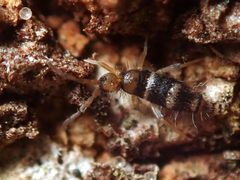
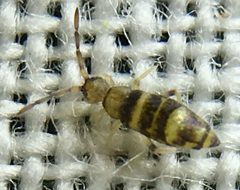
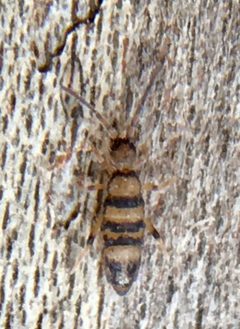
Willowsia platani is a of in the Entomobryidae. First described by Nicolet in 1842, this small hexapod is characterized by its elongated, slender body form typical of the . The species is known from Europe and has been recorded across multiple continents including Asia. As a member of Collembola, it lacks wings and possesses the characteristic (springing organ) that gives springtails their .
Pronunciation
How to pronounce Willowsia platani: //ˌwɪˈloʊziə pləˈtænaɪ//
These audio files are automatically generated. While they are not always 100% accurate, they are a good starting point.
Identification
Members of the Willowsia are recognized by their slender, elongated body shape, distinguishing them from more compact genera. Within Entomobryidae, Willowsia typically show reduced or absent body pigmentation and possess characteristic chaetotaxy (bristle arrangement) patterns. Species-level identification requires examination of microscopic features including setal arrangement, claw structure, and body proportions. Willowsia platani specifically may be distinguished from by subtle differences in these morphological characters, though detailed taxonomic keys are required for definitive identification.
Images
Distribution
Europe (primary range); also recorded from Continental Southeast Asia, Mediterranean region, Western and Central Asia based on GBIF distribution records.
Similar Taxa
- Other Willowsia speciesShare the slender body form and general ; require microscopic examination for separation
- Entomobrya speciesAlso in Entomobryidae with similar overall body plan, but typically more pigmented and with different chaetotaxy patterns
- Lepidocyrtus species Entomobryidae with overlapping size range; distinguished by body shape and scaling patterns
More Details
Taxonomic history
Originally described by H. Nicolet in 1842, this has remained a stable member of the Willowsia. The genus itself is placed in the Willowsiinae and tribe Willowsiini within Entomobryidae.
Collection records
GBIF records indicate observations from multiple continents, though the was originally described from European material. The iNaturalist platform shows 625 observations, suggesting it is regularly encountered by naturalists.