
Coronula
Lamarck, 1802
whale barnacles
Species Guides
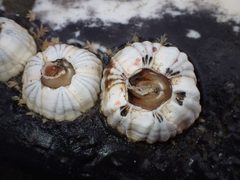
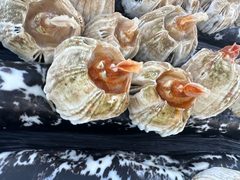
1- Coronula diadema(whale barnacle)
Coronula is a of whale barnacles in the Coronulidae, comprising eight described including both extant and fossil . Extant species are obligate of cetaceans, attaching directly to whale skin using specialized morphological adaptations. The genus is notable for its deep integration, with shell bases forming hollow coring tubes that penetrate whale tissue to achieve secure attachment. Coronula diadema is the best-studied extant species and serves as a model for understanding barnacle-cetacean .
Pronunciation
How to pronounce Coronula: /kəˈroʊnjʊlə/
These audio files are automatically generated. While they are not always 100% accurate, they are a good starting point.
Identification
Shell bases are inflected with sharp, peripheral edges bearing hollow coring tubes filled with tissue—structures unique to this among barnacles. The capitulum is typically covered by calcareous plates arranged in a radiating pattern resembling a crown. Shell accretion occurs through basal constriction, embedding the barnacle into whale skin rather than superficial attachment. Distinguishable from Conchoderma, which lacks coring tubes and attaches to Coronula shells rather than host tissue directly.
Images
Habitat
Strictly marine; found exclusively on the skin of living cetaceans, particularly humpback whales (Megaptera novaeangliae). Attachment sites include areas of relatively stable hydrodynamic conditions on the body.
Distribution
Global in distribution where cetaceans occur; records from Korea, Denmark, Norway, and Sweden reflect both host routes and collection localities. Distribution is constrained by host range rather than independent environmental tolerances.
Diet
Filter feeding on zooplankton captured from water column during swimming. Cirri are short, thick-segmented, and equipped with sharp claw-like setae at ends—adaptations for feeding in strong currents generated by host movement.
Host Associations
- whales (cetaceans) - obligate Direct attachment to skin via coring tubes; not known from other
Life Cycle
Larval stages include nauplius and cyprid; cyprids must locate and settle on living cetacean to complete development. Post-settlement shell growth involves basal constriction and tissue penetration. Specific developmental timing relative to host is not documented.
Behavior
as ; permanently attached to . Simultaneous capable of mating with up to nine surrounding individuals, facilitating despite limited mobility on host surface.
Human Relevance
Collected from stranded whales for scientific study; fossil provide biostratigraphic markers and evidence of ancient cetacean distributions. No direct economic importance.
Similar Taxa
- Conchoderma auritumAlso whale-associated but lacks coring tubes; attaches to Coronula shells rather than tissue directly, and possesses distinctive tubular ear-shaped capitular structures
More Details
Fossil record
Five of eight described Coronula are known only from fossils (C. aotea, C. barbara, C. bifida, C. dormitor, C. ficarazzensis, C. macsotayi), indicating long evolutionary association with cetacean extending into the Neogene.