
Diaptomidae
Baird, 1850
Diaptomidae is a of freshwater pelagic copepods comprising approximately 50 . Members are the most widespread copepods in lentic inland waters of the Palearctic region. The family contains two : Diaptominae and Paradiaptominae, with the latter consisting almost exclusively of African . Diaptomids exhibit high in tropical and Mediterranean regions, with numerous .
Pronunciation
How to pronounce Diaptomidae: /daɪˈæptəˌmaɪdiː/
These audio files are automatically generated. While they are not always 100% accurate, they are a good starting point.
Identification
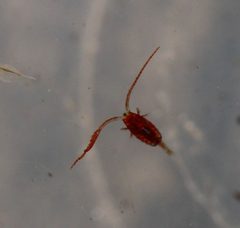
Diaptomids are distinguished from other calanoid copepods by features of the fifth pair of legs (P5), which show and taxonomically diagnostic structures. Males typically possess asymmetrical fifth legs with modified right and left appendages used in mating; specific characters include basipod shape, presence and structure of hyaline lobes or , and spine arrangements. Copepodid stages can be identified by urosomite number, antennule development, leg segmentation, and fifth leg development.
Images
Habitat
Freshwater lentic (still water) including lakes, ponds, , and temporary waters. occur in a range of water quality conditions from pristine to moderately impacted systems.
Distribution
in freshwater with highest diversity in the Palearctic, Neotropical, and Afrotropical regions. Thailand harbors one of the most diversified diaptomid faunas globally with 42 . High occurs in Mediterranean limnofaunistic provinces, Southeast Asia, and southern Africa. The Paradiaptominae is predominantly African.
Life Cycle
hatch into six naupliar stages, followed by five copepodid stages (CoI–CoV), with final to . Late postnaupliar development (CoIII–CoV) involves progressive segmentation of legs 1–4, antennule development, and differentiation of the fifth leg. Sexual maturity is reached after the fifth copepodid stage.
Ecological Role
Primary consumers in freshwater planktonic . Serve as important prey for fish and other aquatic . High co-occurrence of multiple (4–7) at single localities has been documented in some regions, suggesting partitioning or resource partitioning among sympatric species.
Human Relevance
Used as bioindicators for water quality assessment. Some serve as live food in aquaculture. Subject of ongoing taxonomic research due to high cryptic diversity and .
Similar Taxa
- PseudodiaptomidaeBoth are within Calanoida; Pseudodiaptomidae are primarily estuarine and marine, whereas Diaptomidae are exclusively freshwater. Pseudodiaptomids lack the characteristic fifth leg modifications of diaptomids.
- CentropagidaeAnother calanoid with freshwater representatives; distinguished by different fifth leg and antennule segmentation patterns.
Sources and further reading
- BugGuide
- Wikipedia
- GBIF taxonomy match
- iNaturalist taxon
- NCBI Taxonomy
- Catalogue of Life
- New Diaptomidae records (Crustacea: Copepoda: Calanoida: Diaptomidae) in the Neotropical region
- Redescription and distribution of Mastigodiaptomus montezumae (Copepoda, Calanoida, Diaptomidae) in Mexico
- Distribution and biogeography of the Paradiaptominae (Copepoda: Calanoida: Diaptomidae)
- Distribution patterns of the Diaptomidae (Calanoida: Copepoda) in southern Africa
- Diversity and Distributional Patterns of Neotropical Freshwater Copepods (Calanoida: Diaptomidae)
- New Record of Arctodiaptomus (Mesodiaptomus) toni Brehm, 1937 (Copepoda, Calanoida, Diaptomidae) From İnland Water of Turkey. Türkiye İç Sularından Arctodiaptomus (Mesodiaptomus) toni Brehm, 1937 (Copepoda, Calanoida, Diaptomidae)'nin Yeni Kaydı.
- New record of Phyllodiaptomus (Ctenodiaptomus) praedictus sulawensis Alekseev & Vaillant, 2013 (Hexanauplia, Copepoda, Calanoida, Diaptomidae) in the Philippines (Luzon Island)
- Diversity, Distribution, and Habitat Occurrence of the Diaptomid Copepods (Crustacea: Copepoda: Diaptomidae) in Freshwater Ecosystems of Thailand
- Late postnaupliar development of the freshwater copepods Lovenula falicifera and Metadiaptomus colonialis (Calanoida: Diaptomidae) from South Africa
- A new species of the genus Tropodiaptomus (Copepoda, Diaptomidae, Diaptominae) from Nepal
- A new Argyrodiaptomus (Copepoda: Calanoida: Diaptomidae) from the southwestern Brazilian Amazon
- Distribution patterns of the Diaptomidae (Calanoida: Copepoda) in southern Africa
- An annotated checklist and bibliography of the Diaptomidae (Copepoda, Calanoida) of Italy, Corsica, and the Maltese islands
- The Taxonomic Anomalies Associated With the Indian Calanoid Copepod, Heliodiaptomus Viduus (Gurney, 1916) (Diaptomidae): a Case Study
- Tropodiaptomus signatus Kiefer, 1982, a little-known species from Loktak Lake, Manipur State, India (Copepoda, Calanoida, Diaptomidae)
- DNA barcoding of North American freshwater copepods (Diaptomidae and Cyclopoida): an overview after 20 years with emphasis in the Mexican fauna, the transition between the Nearctic and Neotropics.
- Two New Species of the Taxonomically Ambiguous Mongolodiaptomus birulai Group from Southwestern China and Southeast Asia (Crustacea, Copepoda, Calanoida, Diaptomidae).
- A new species of Pseudodiaptomus (Copepoda, Calanoida, Pseudodiaptomidae) from the Great Barrier Reef, Australia.
- Two new species of Tropodiaptomus Kiefer, 1932 (Copepoda, Calanoida, Diaptomidae) from temporary waters in Thailand and Cambodia with a key to Southeast Asian species.