
Tylos punctatus
Holmes & Gay, 1909
Spotted Calloused Beach Pillbug
Tylos punctatus is a large, strictly sand-beach isopod inhabiting sheltered intertidal zones from southern California to Baja California. It exhibits remarkable behavioral adaptations to this harsh environment, including precise burrowing cycles synchronized with tidal patterns and seasonal dormancy. The has an exceptionally slow for an isopod, with females breeding only once annually after reaching maturity at approximately three years of age.
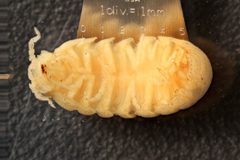
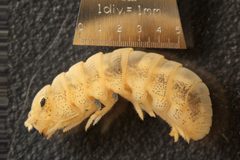
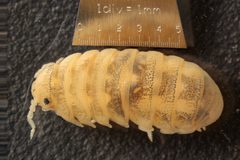
Pronunciation
How to pronounce Tylos punctatus: /ˈtaɪloʊs pʌŋˈteɪtəs/
These audio files are automatically generated. While they are not always 100% accurate, they are a good starting point.
Images
Habitat
Sheltered sandy beaches in the high intertidal and supralittoral zones; strictly associated with marine sand beach environments. Burrows in sand during daylight hours, typically at or above the high-water mark; may burrow up to one meter deep in winter.
Distribution
Pacific coast of North America: southern California (USA) and Baja California (Mexico). GBIF records also indicate presence in broader Central America and Mexico, though California-Baja California are best documented.
Seasonality
Strictly surface activity from March through late October or November; complete winter dormancy with no surface from approximately November through February. Surface activity initiated after evening high tide has begun to ebb.
Diet
Feeds nocturnally on stranded seaweeds and dead animals (carrion) washed up on the beach.
Life Cycle
Females breed once annually in summer, incubating embryos in pouches for approximately 9 weeks above the high-tide line. Average brood size is 13.6 young, with larger females producing more offspring. Most females do not breed before age 3 and die shortly after their single reproductive event. Some males survive to at least 4 years. Growth occurs during a 5-month summer period only; growth rate declines with age. No significant difference in growth rates between sexes.
Behavior
Strictly ; buries in sand by day. Navigates using beach slope: moves seaward initially after , with seaward tendency diminishing as it progresses down the beach. Returns up-beach after feeding to bury at the previous night's high-water mark. Does not emerge onto surface when high tide occurs early in evening until tide begins ebbing from over its burrow location.
Ecological Role
Scavenger and in the supralittoral beach ; processes stranded marine and animal matter. Serves as a potential bioindicator for heavy metal accumulation, with documented concentrations in hepatopancreas comparable to more marine isopod .
More Details
Subspecies
Two recognized: Tylos punctatus insularis Van Name, 1936 and Tylos punctatus punctatus Holmes & Gay, 1909.
Population Biology
Extremely abundant on suitable beaches (e.g., El Estero Beach); reproductive rate notably low compared to other oniscoid isopods, consistent with K-selected strategy in a stable but physically stressful .
Sources and further reading
- BugGuide
- Wikipedia
- GBIF taxonomy match
- iNaturalist taxon
- NCBI Taxonomy
- Catalogue of Life
- Bug Eric: Spider Sunday: Phidippus octopunctatus
- ID Challenge #18 | Beetles In The Bush
- Euonymus peril - Euonymus leaf notcher, Pryeria sinica — Bug of the Week
- Anne Arundel County - This Bug's for You: The Euonymus Leaf Notcher, Pryeria sinica — Bug of the Week
- Yet another exotic invader: Euonymus leaf notcher, Pryeria sinicia — Bug of the Week
- Bug of the Week
- Copper Concentrations in the High‐Beach Isopod Tylos Punctatus
- The Behavior and Life History of a Sand‐Beach Isopod, Tylos Punctatus